
Details
Anothr Lap
Client
Role
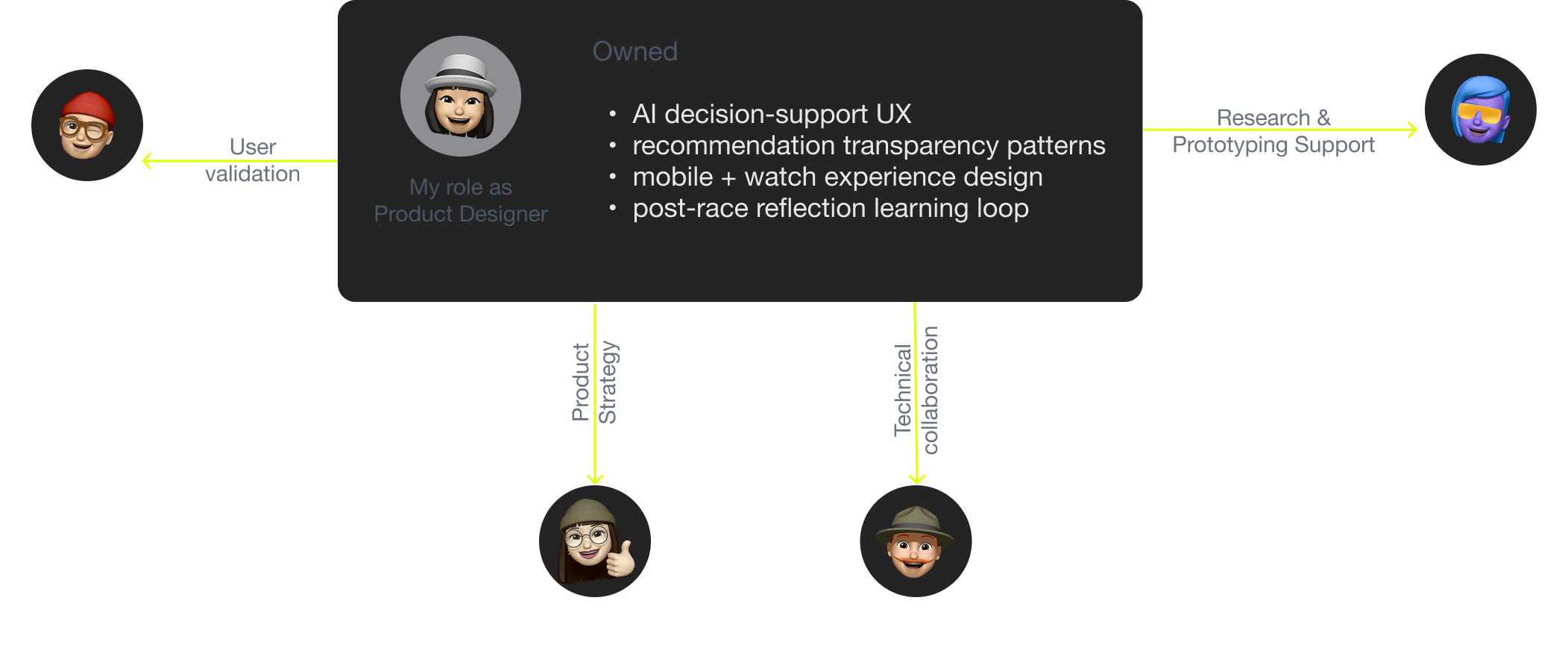
Lead Product Designer
User Experience · AI Systems
Timeline
Q2 2025 to present, launching 2027
AI-assisted decision support for endurance athletes
A mobile app + watch companion designed for race preparation, race-day execution, and post-race learning.
Overview
Product management, engineering, data science, endurance athletes
Collaborators

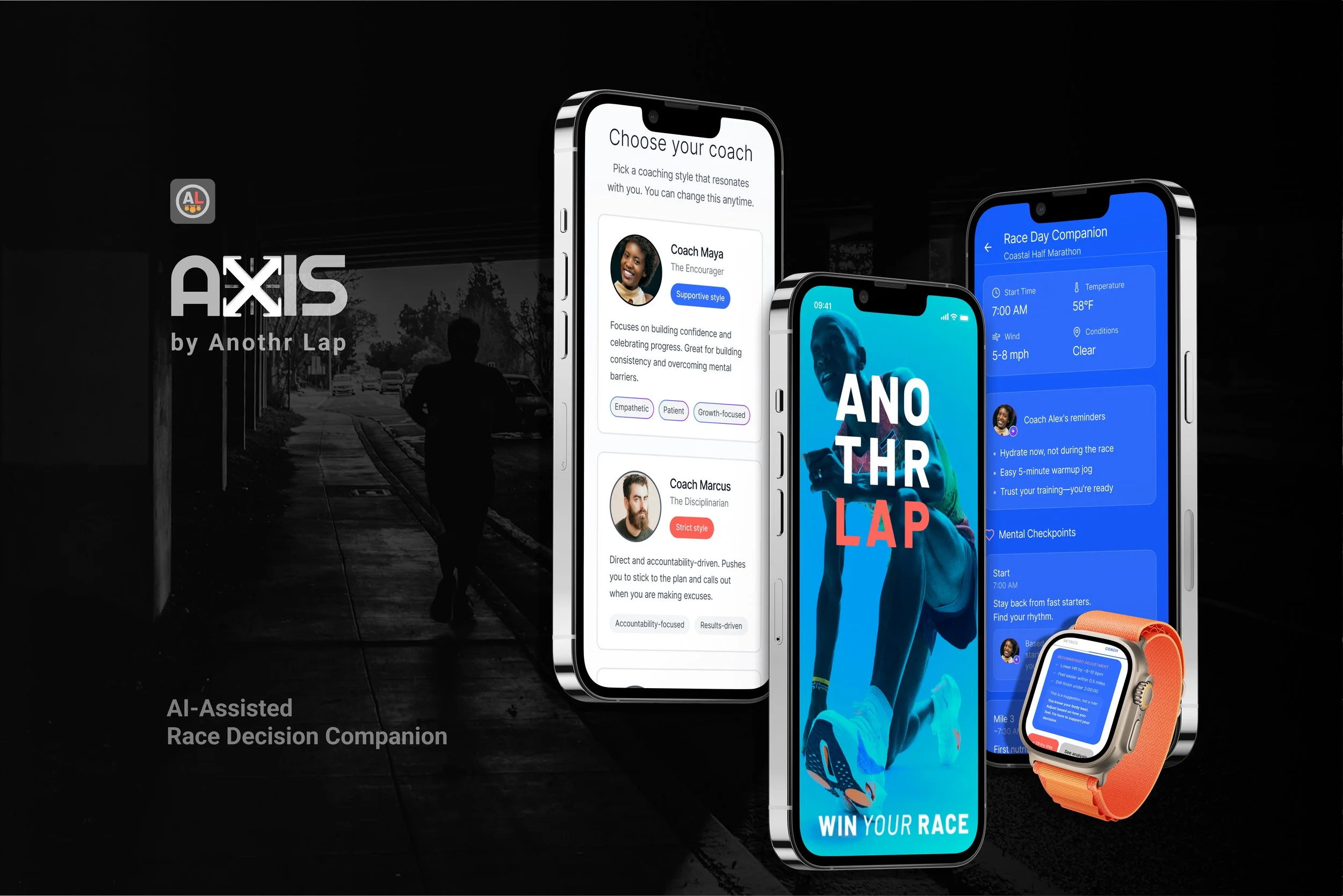
What is AXIS?
Most fitness apps show performance; none tell you what to do next.
AXIS is an attempt to close that gap, rethinking AI assistance for an athlete at the start line.
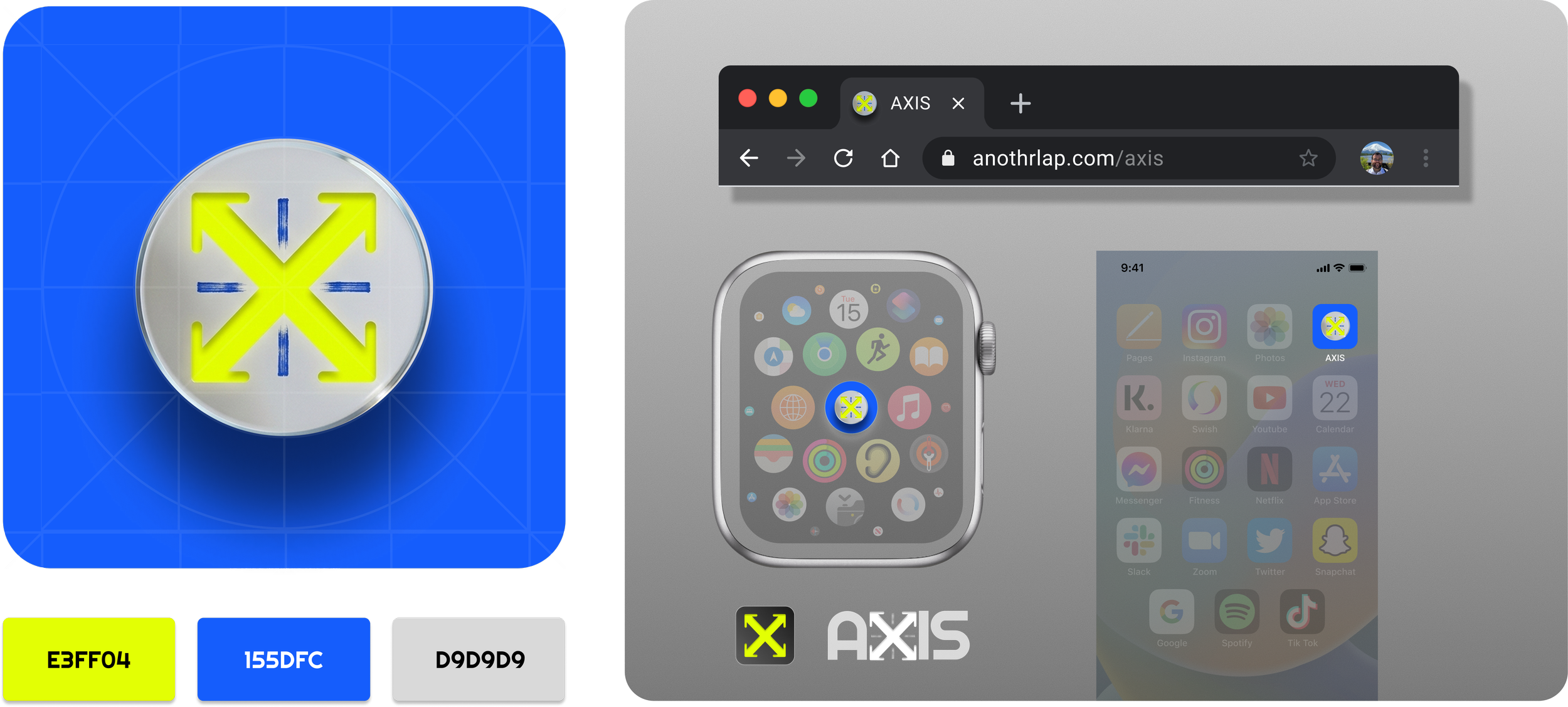
Due to product confidentiality, certain data, metrics, and implementation details have been simplified or anonymized.
The design approach and system thinking reflect the real project work.
💌 Get in touch to learn more.
System Overview
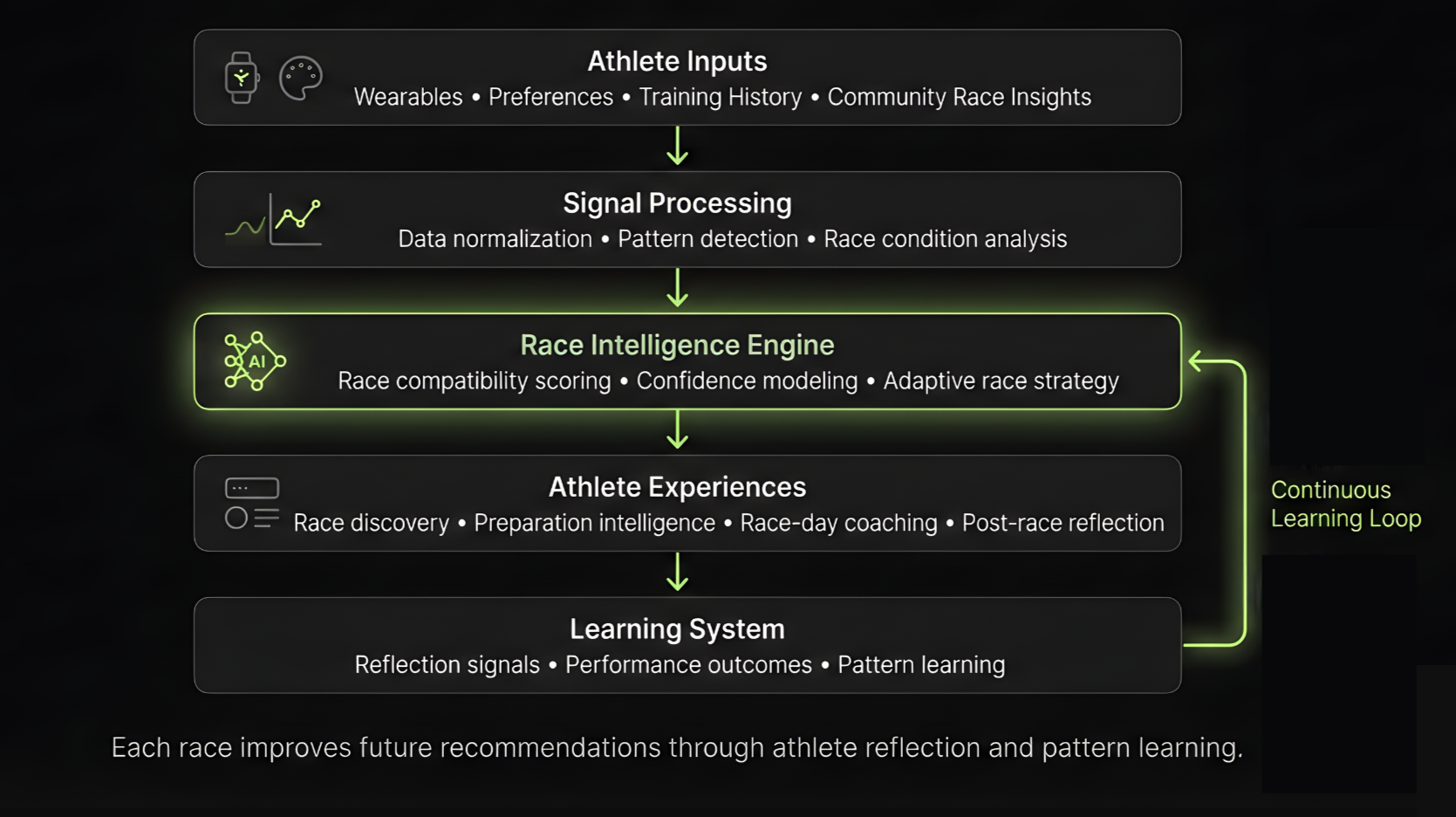
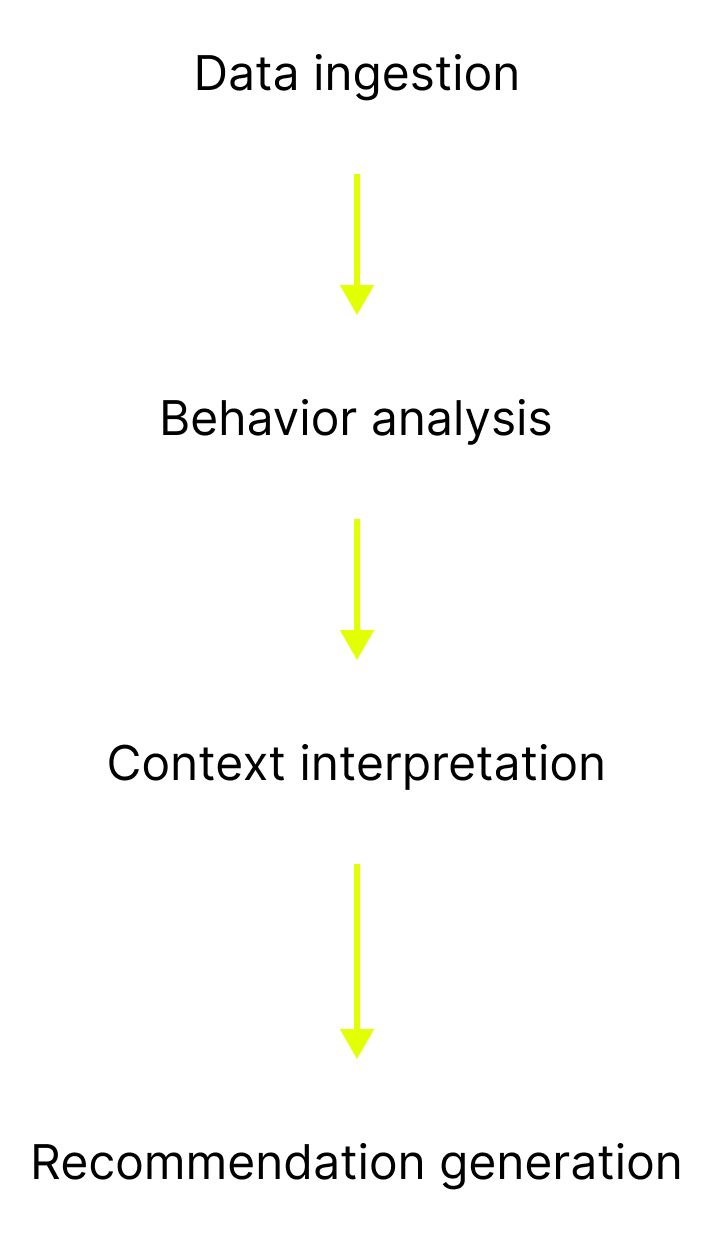
AXIS operates as a closed-loop system that continuously improves race guidance by evolving recommendations over time.
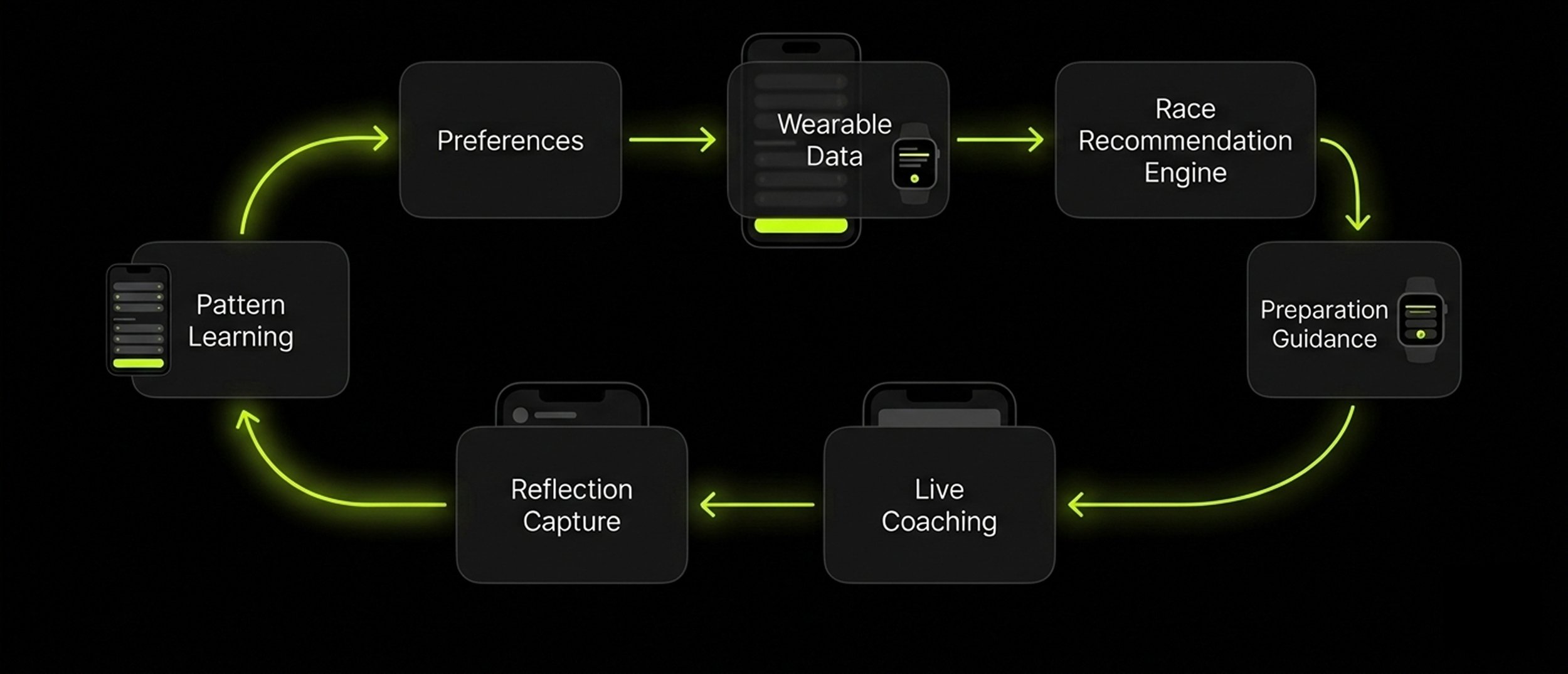
AXIS Race Intelligence
The Problem
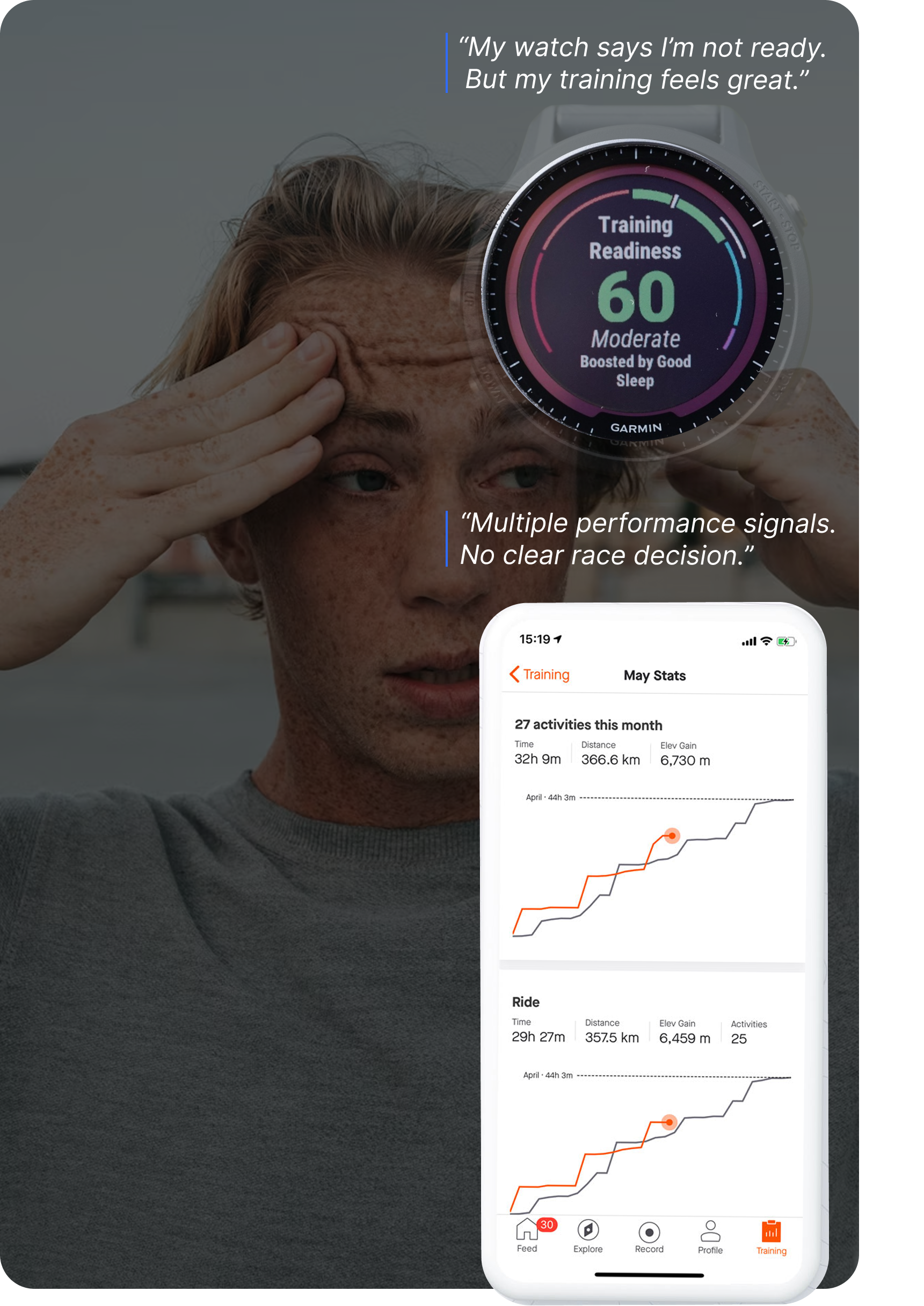
Endurance athletes track extensive performance data.
Pace. Heart rate. Recovery. Training load.
But when planning a race, they still ask,
“What should I actually do with this data?”
The Solution
Your data has been training quietly for years.
AXIS puts it to work
turning performance history into race decisions, and every race into sharper guidance for the next one.
What athletes told us first
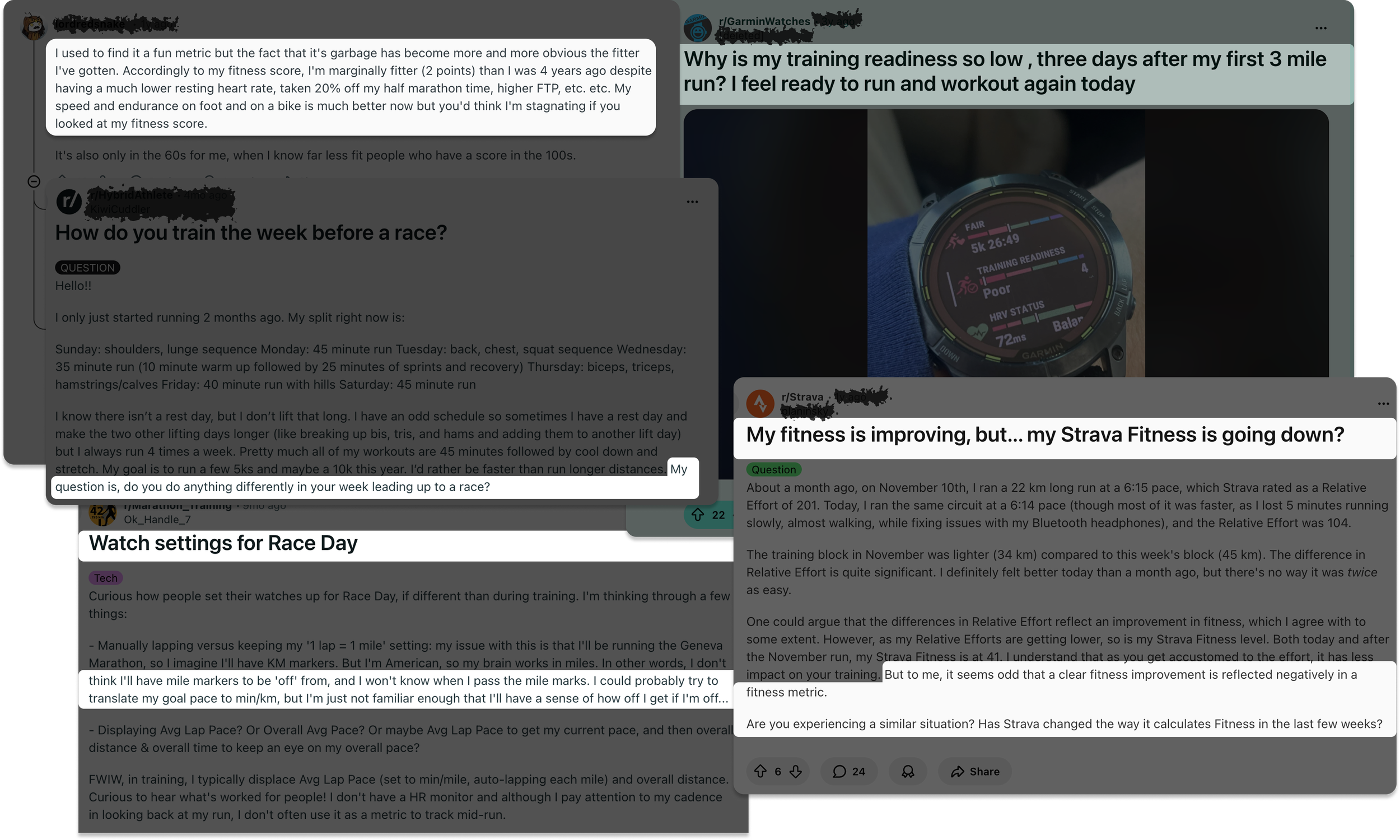
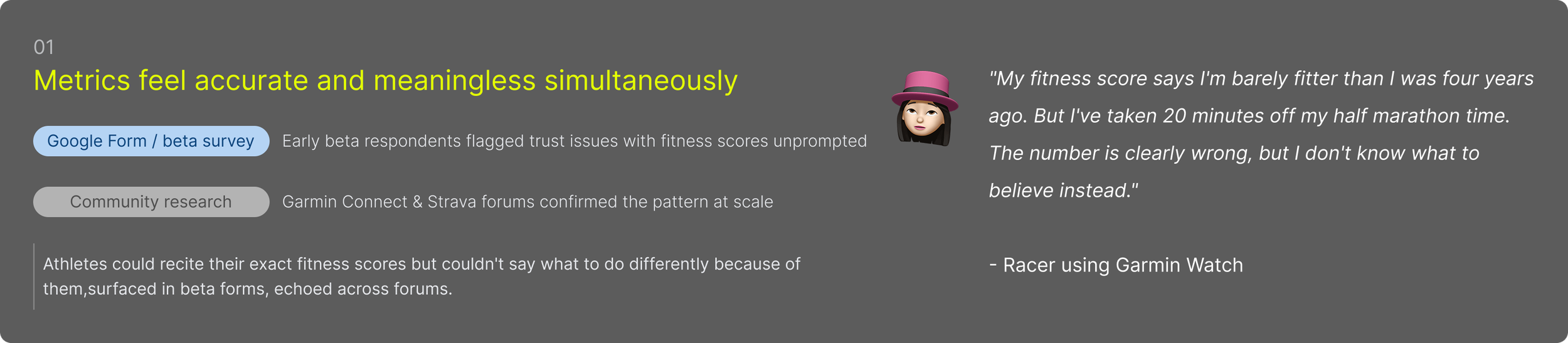
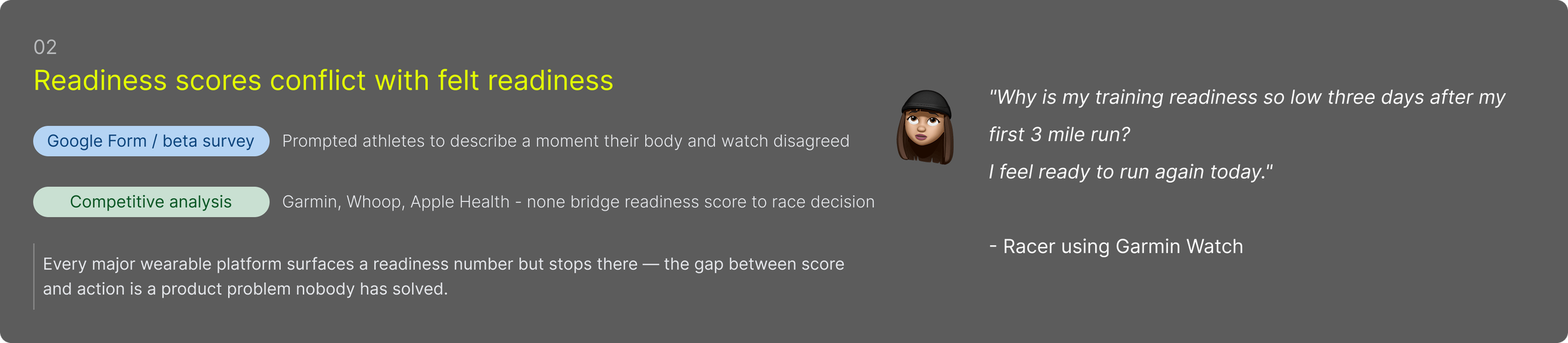
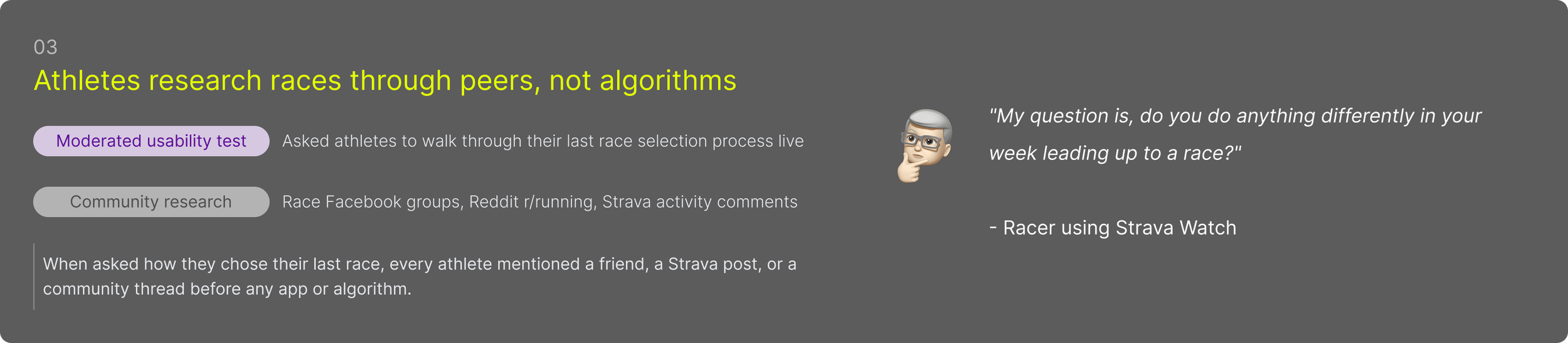
Mixed-methods research across two phases - a beta survey to surface patterns at scale, followed by moderated usability testing with 14 endurance athletes to understand the why behind them. Community research across Strava, Reddit, and Garmin forums ran throughout.
Business Context
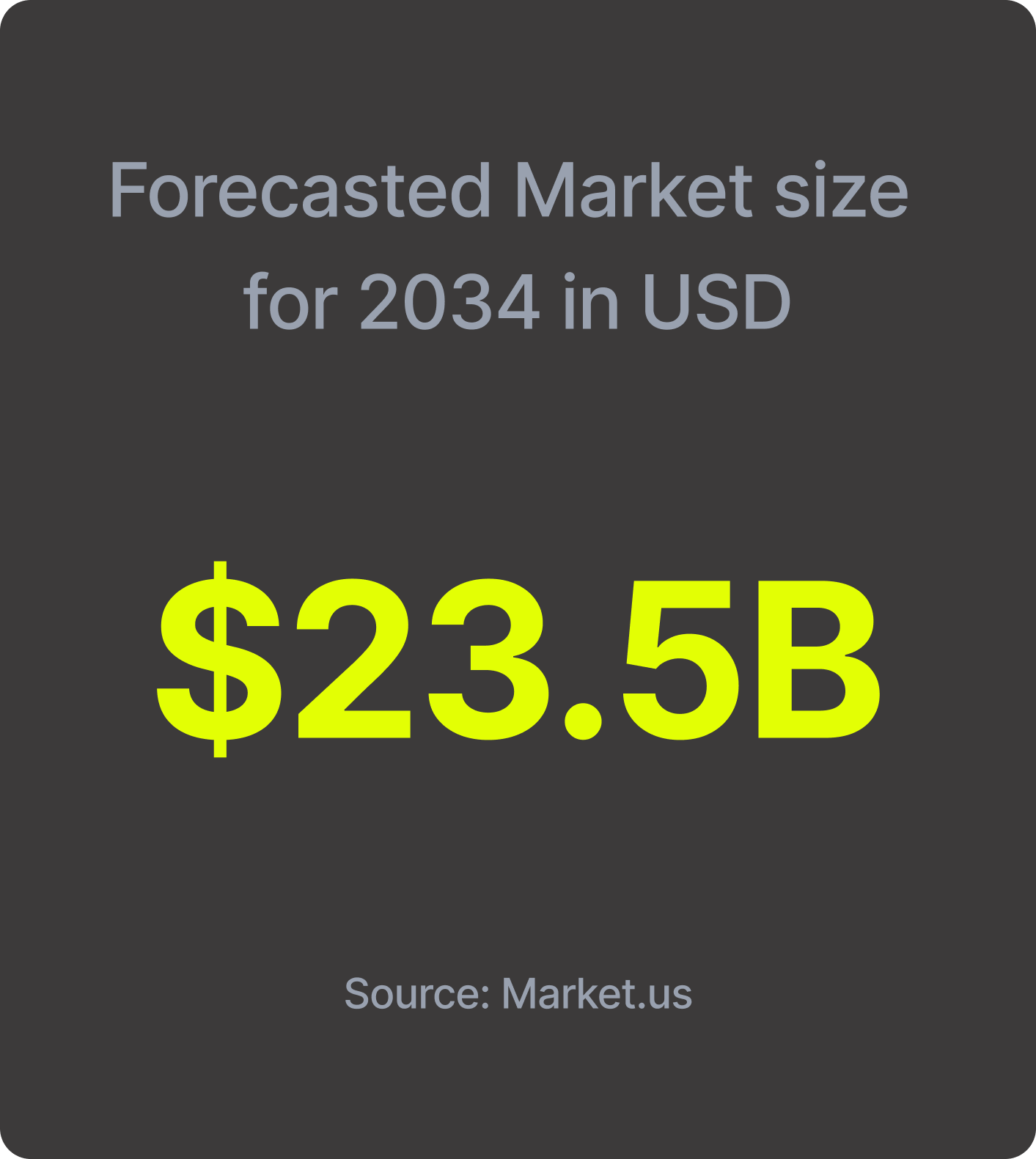
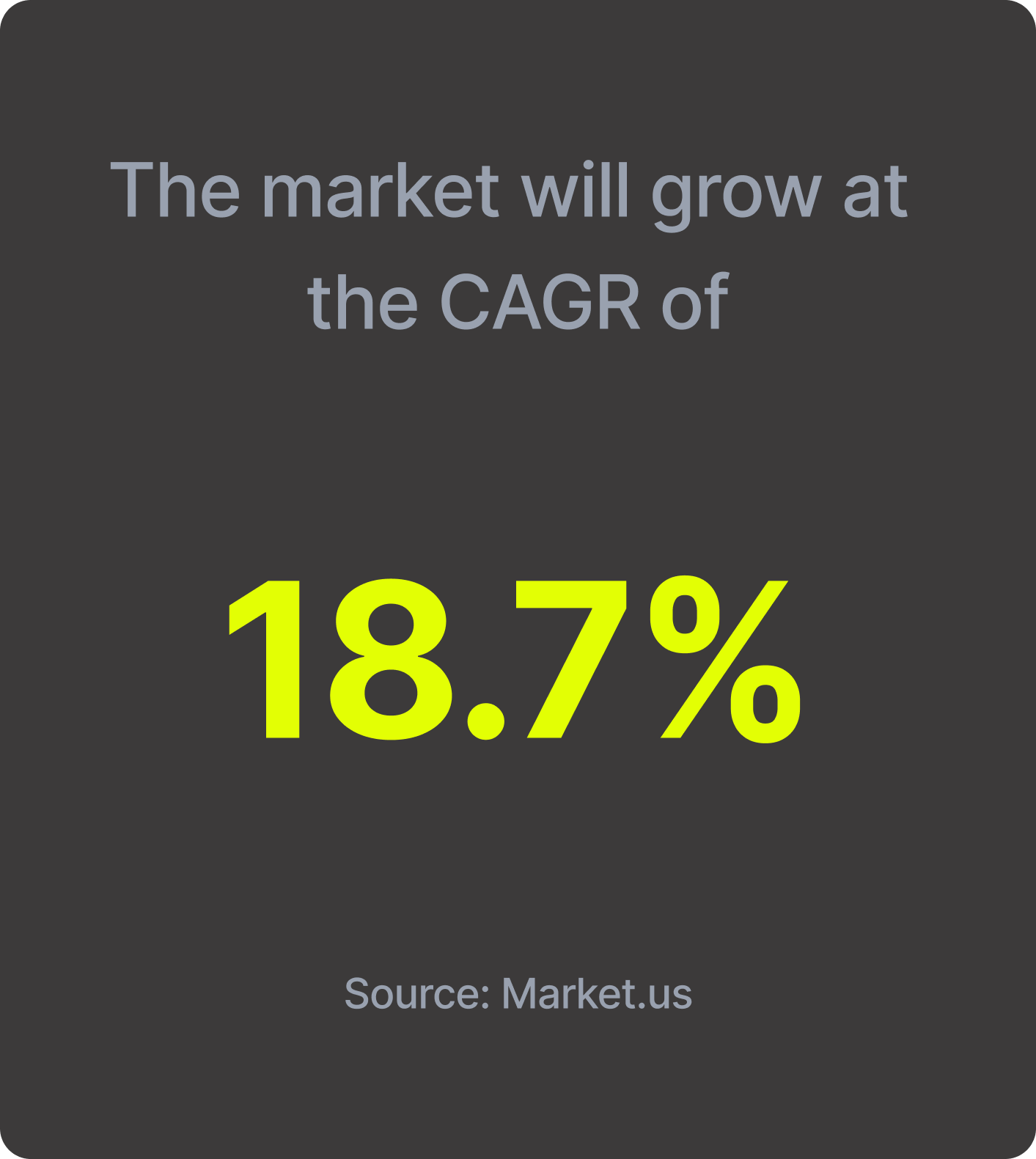
AI coaching is scaling via ML-driven personalization, smart recommendations, behavioral analytics, and adaptive feedback.
Wearables/apps track pace, recovery, HRV, and load live, but mostly act as dashboards, not decision-makers.
That gap invites adaptive race intelligence tools to choose races, refine training, tweak race-day strategy, and learn constantly.
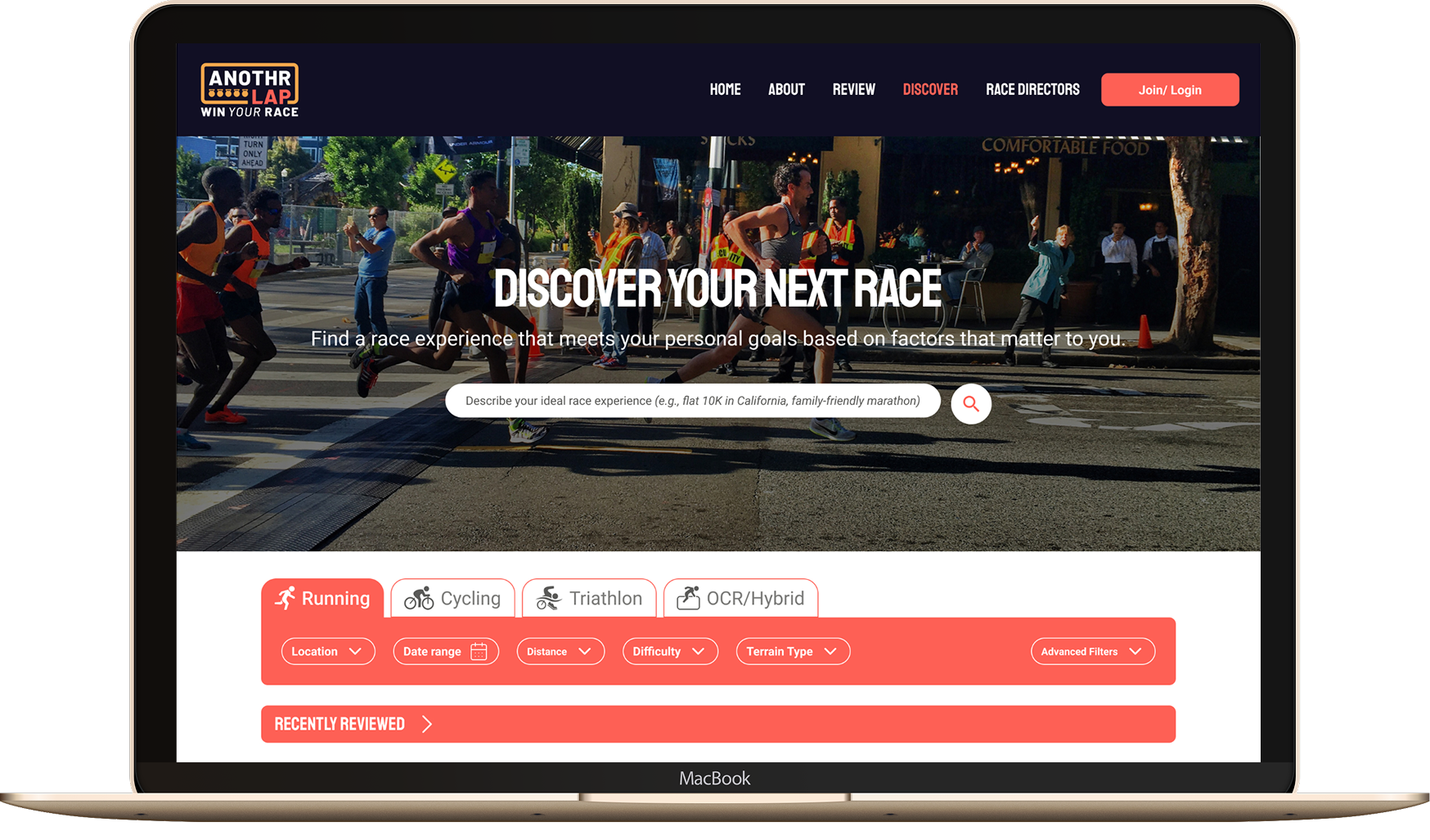

4. For Anothr Lap, which already aggregates athlete-generated race insights, AXIS extends the platform from race discovery to race decision intelligence.
Decision Calibration
Before recommending races, the system calibrates athlete context.
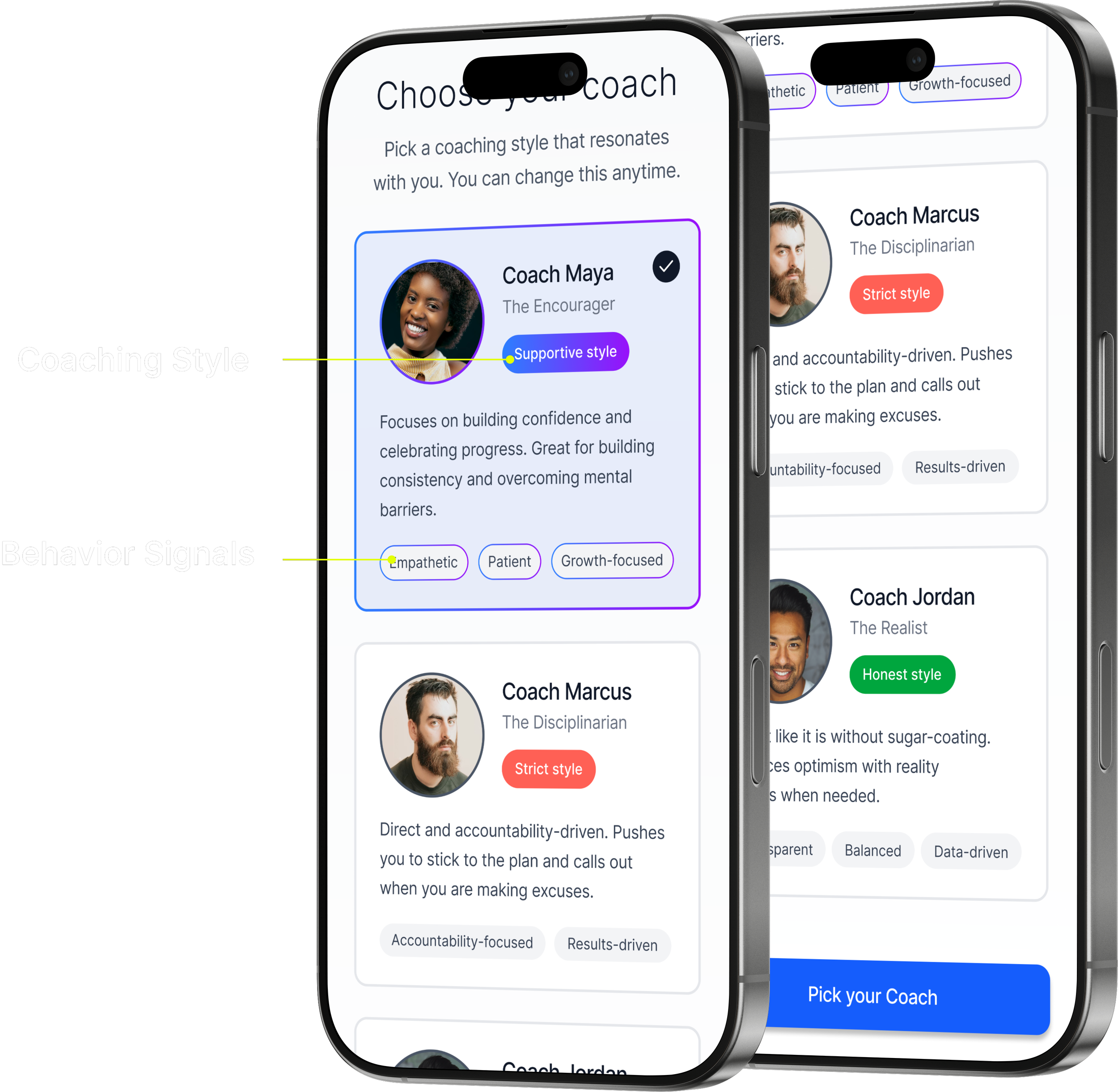
Step 1 - Coach & Tone Selection
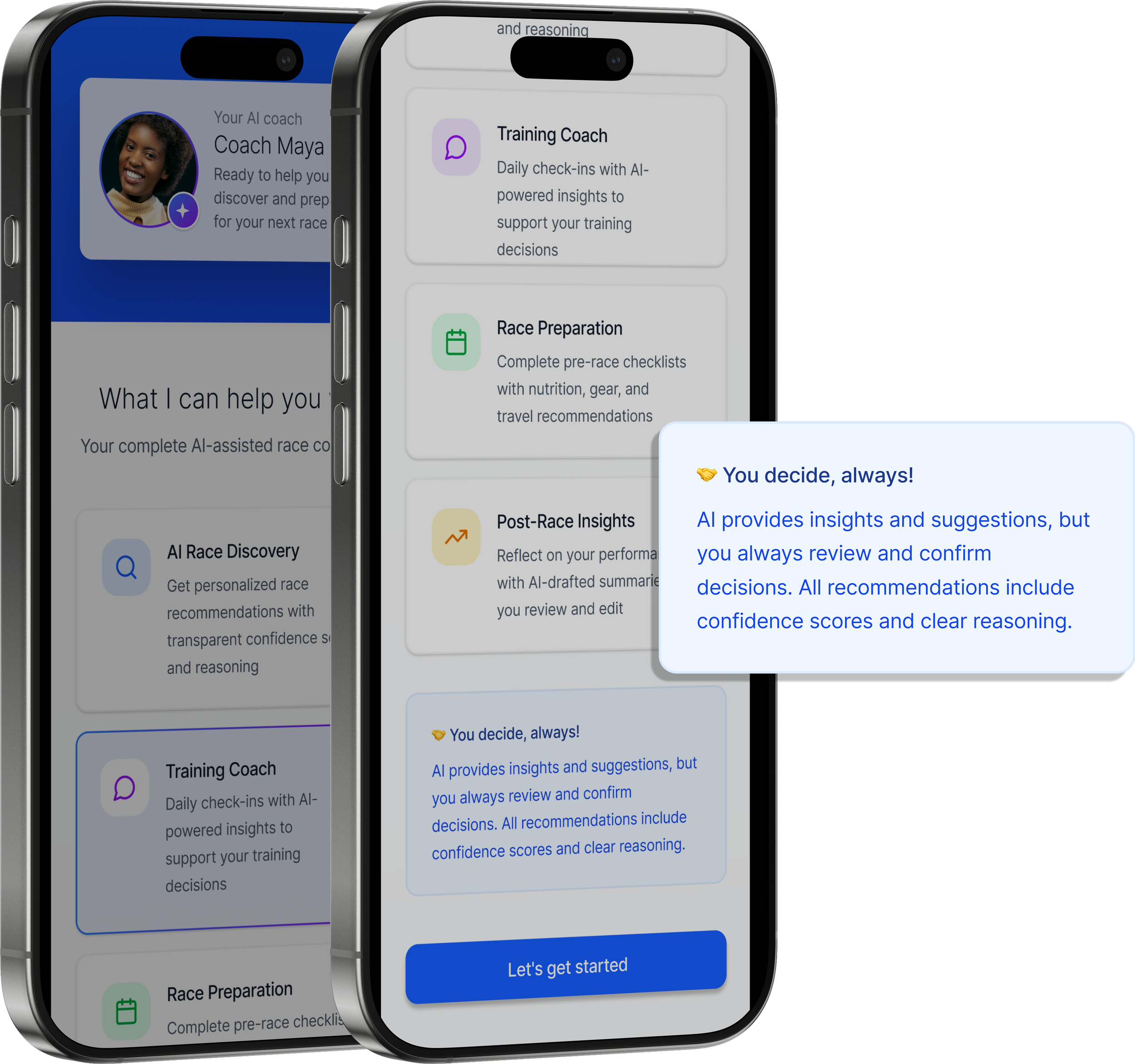
AXIS also adapts tone dynamically - supportive when performance dips, more challenging and celebratory when performing well.
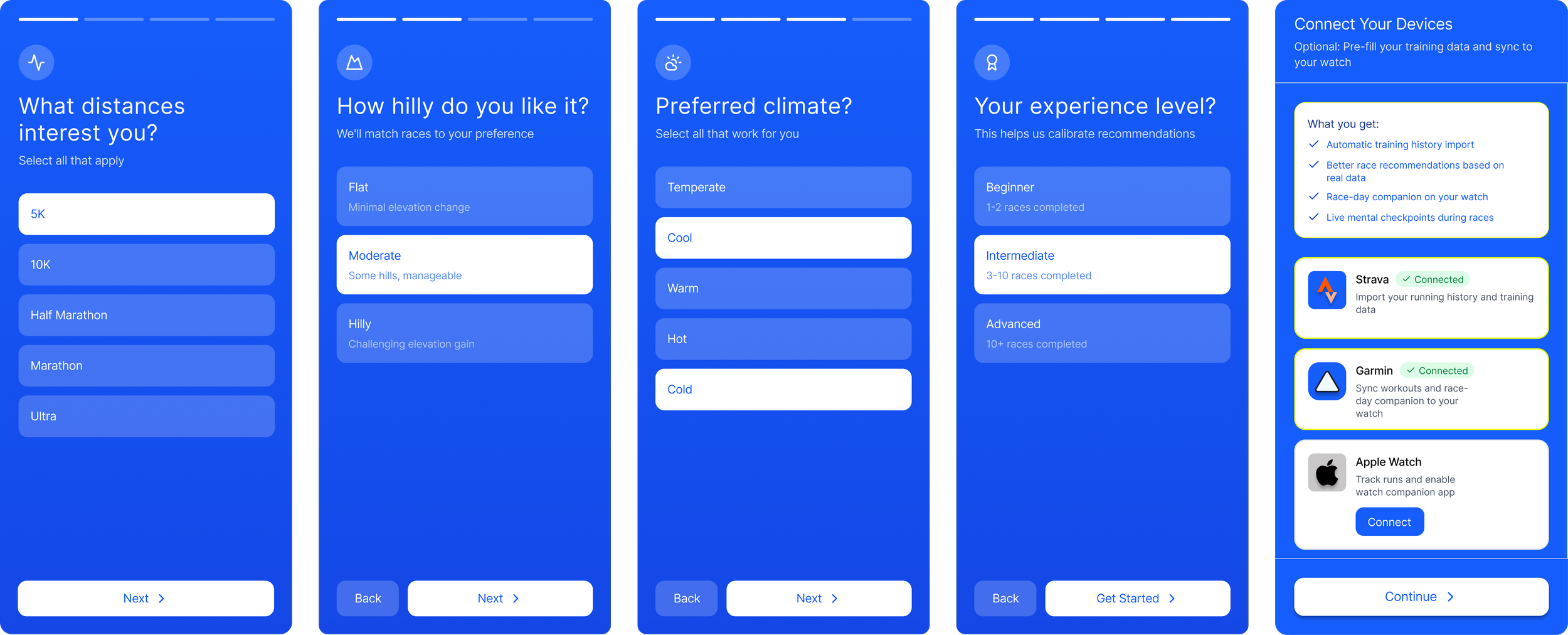
Define race preferences and optionally connect wearable data for richer guidance.
Step 2 - Preferences & Data Signals
Two directions we tried first
Two earlier concepts taught us what the real problem wasn't.
01 Chatbot interface
"I don't want to ask the right question. I just want it to tell me what I need to know."
- Ultramarathon runner, research session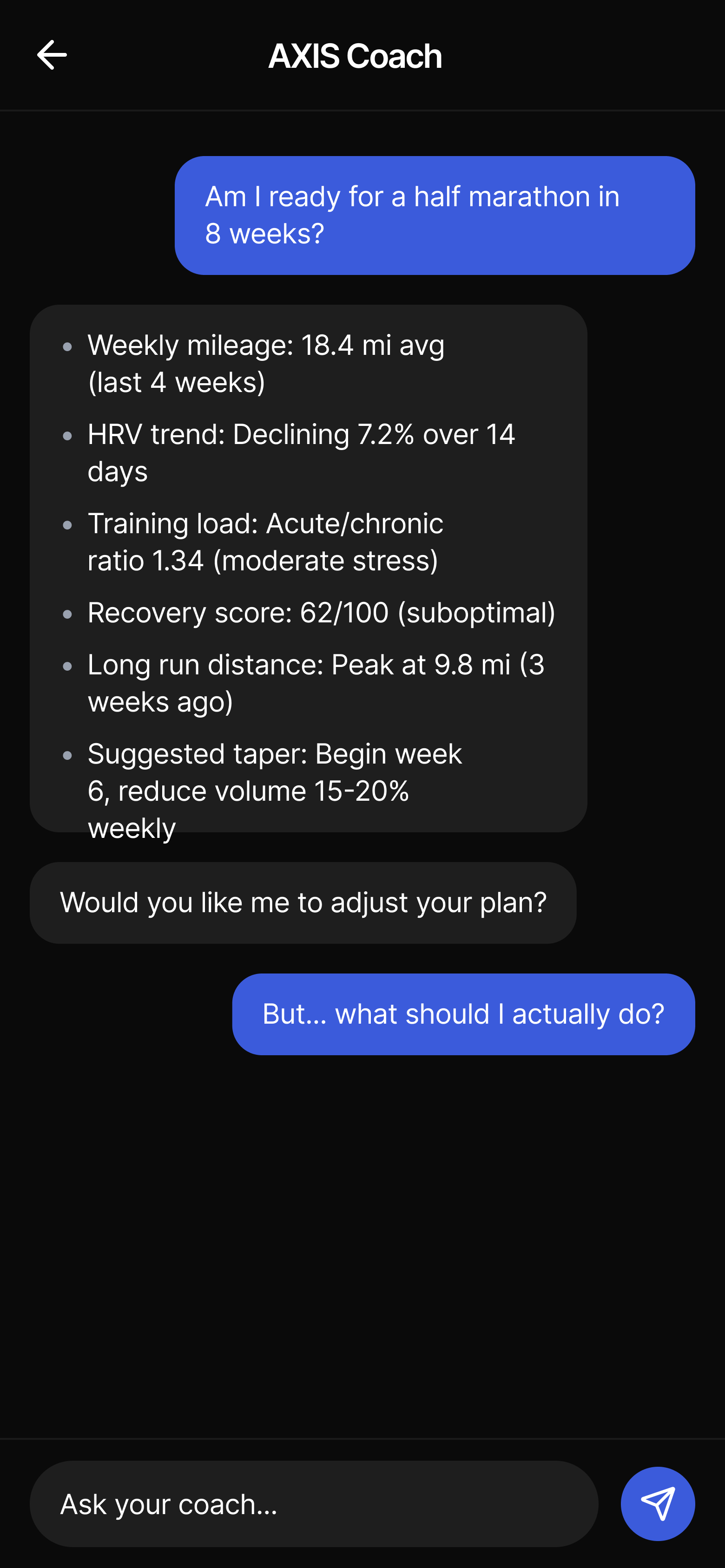

Athletes could ask anything. In practice, they asked one question — then immediately asked why. The conversation loop added friction instead of removing it.
"I had everything checked off. I still had no idea what the elevation was going to feel like."
— Half marathon runner, research session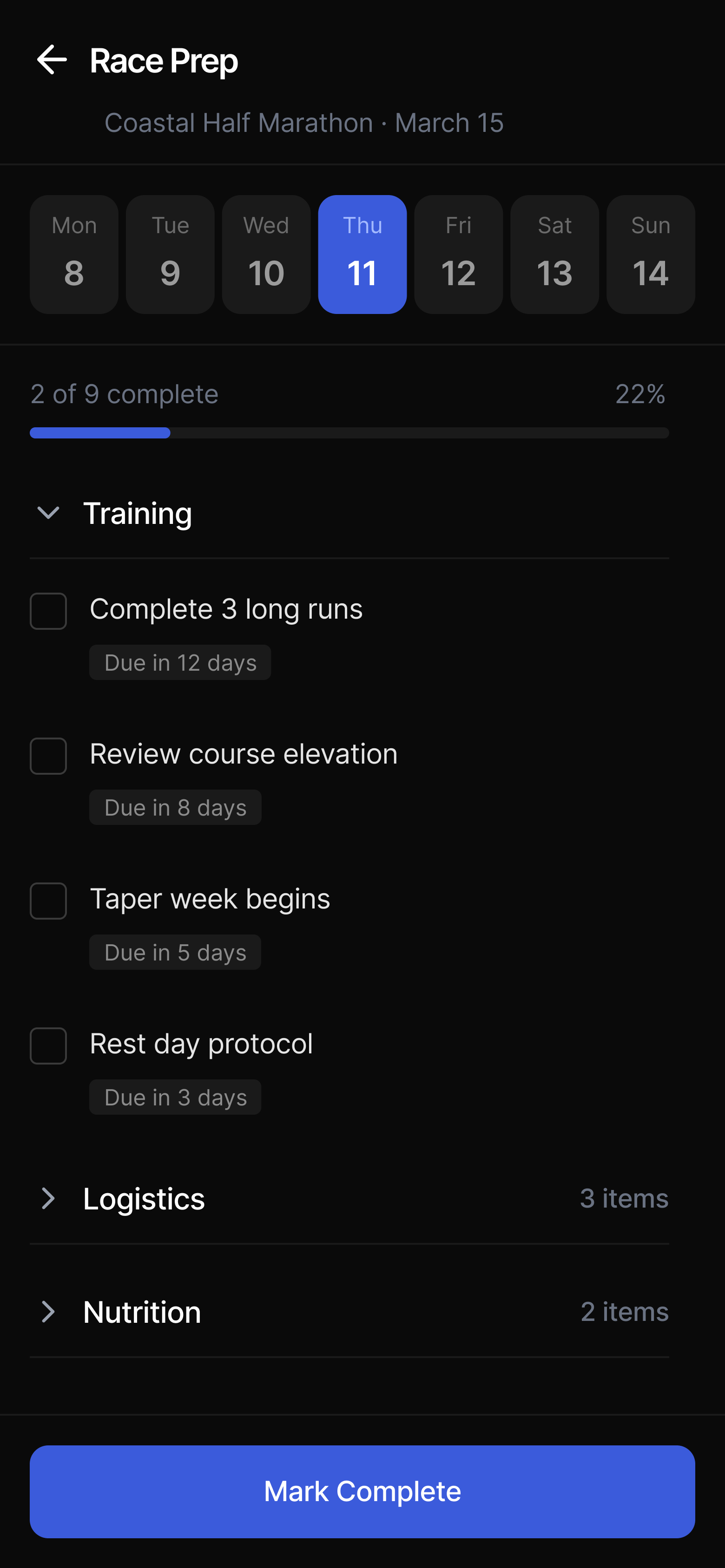

Structured. Satisfying to complete. Totally missed the upstream problem. Athletes finished every checklist and still arrived at races unprepared for terrain and conditions.
02 Calendar & training plan
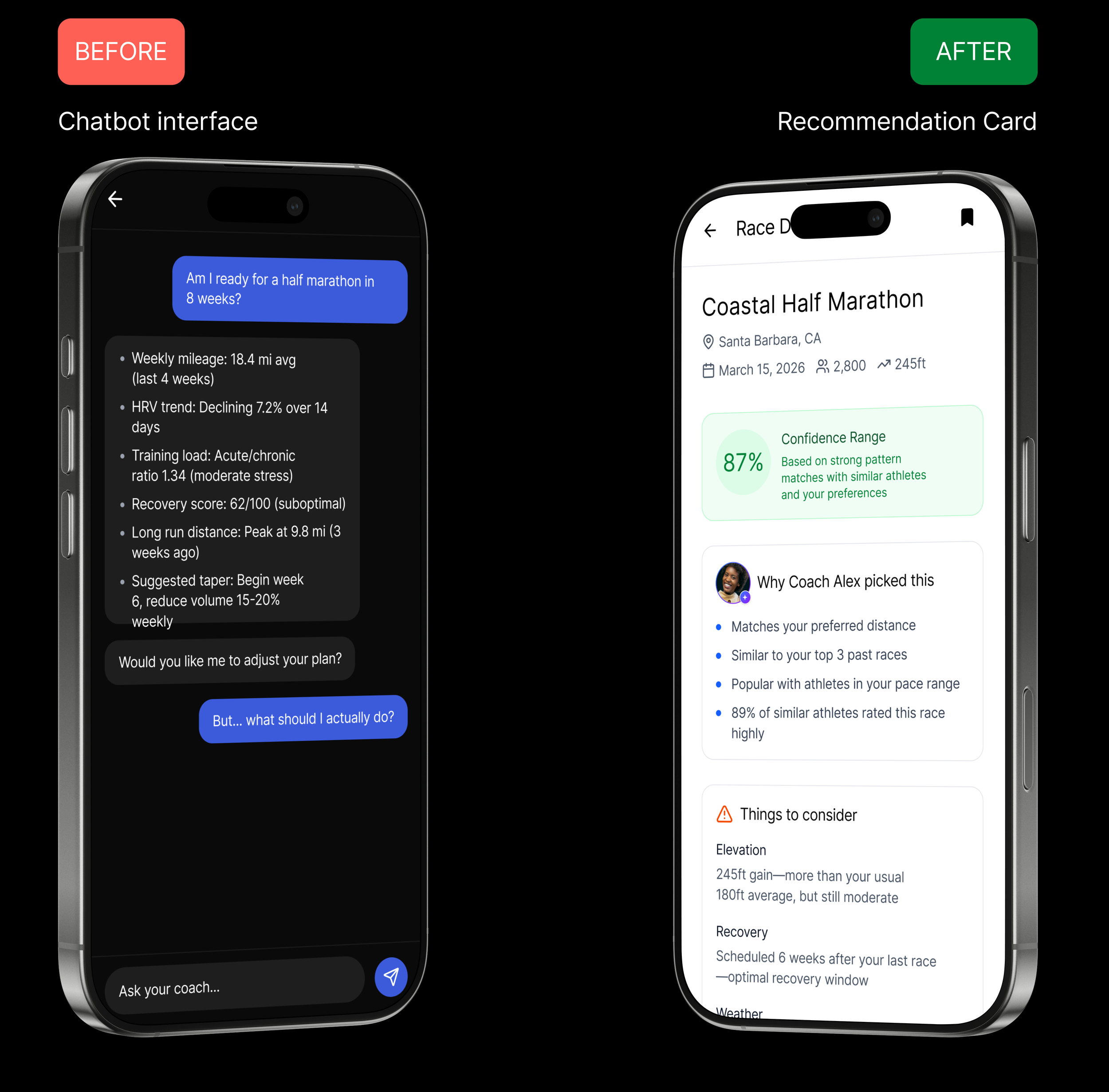
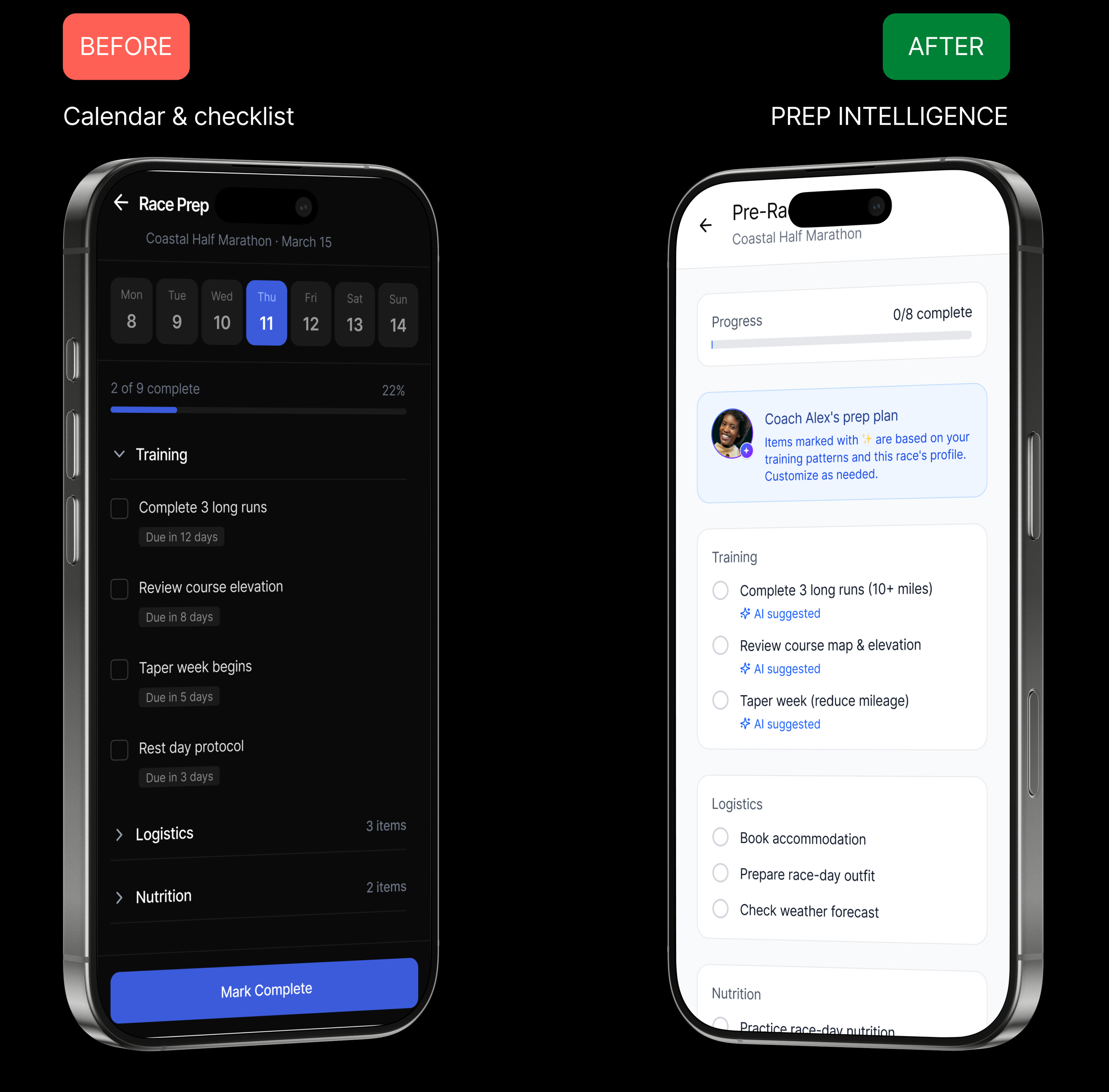
Recommendation Logic
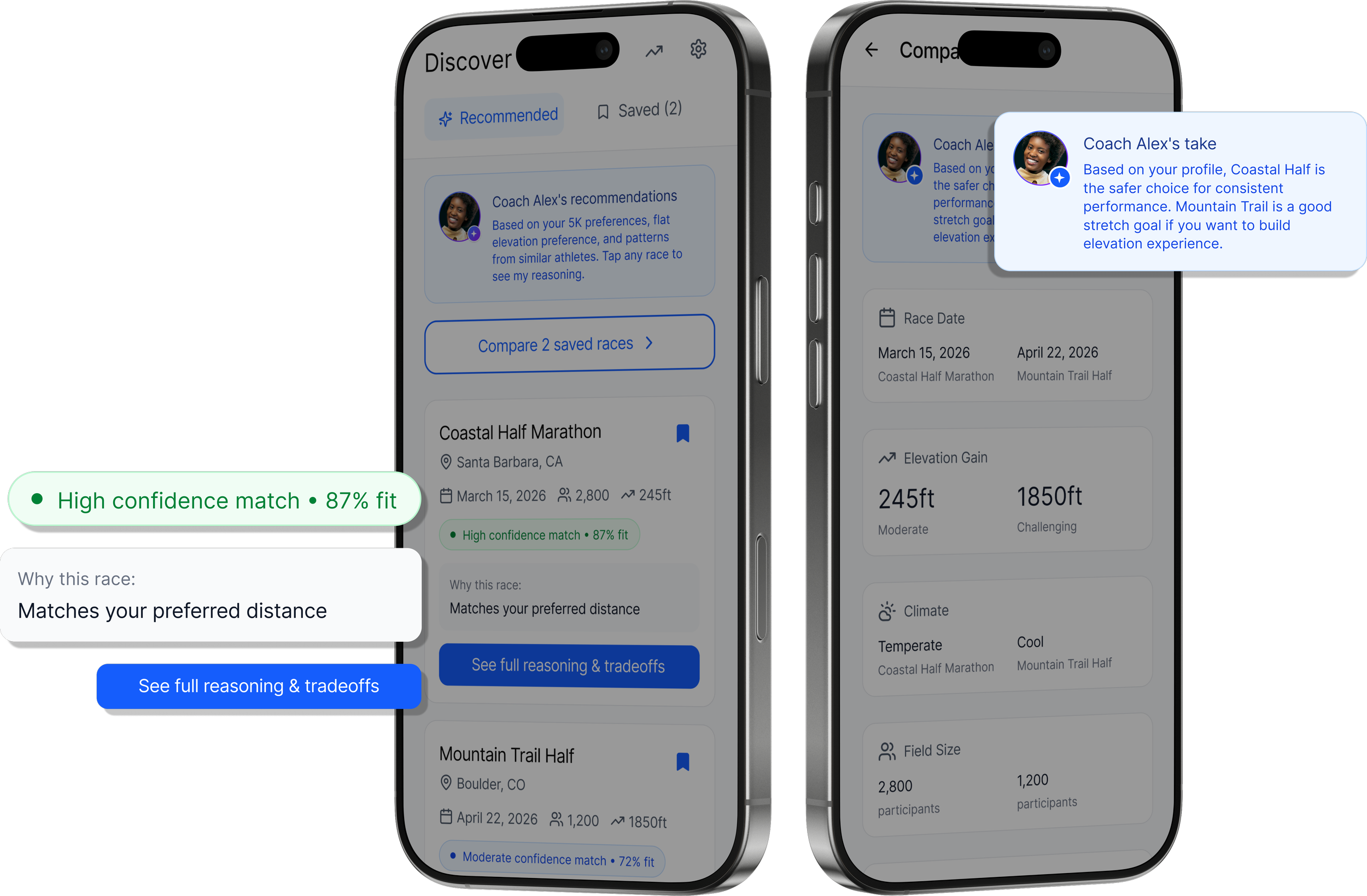
After calibration, AXIS evaluates potential races using
• Distance compatibility
• Terrain tolerance
• Similarity patterns
Each race is assigned a confidence score and surfaced with transparent reasoning so athletes can evaluate trade-offs before committing.
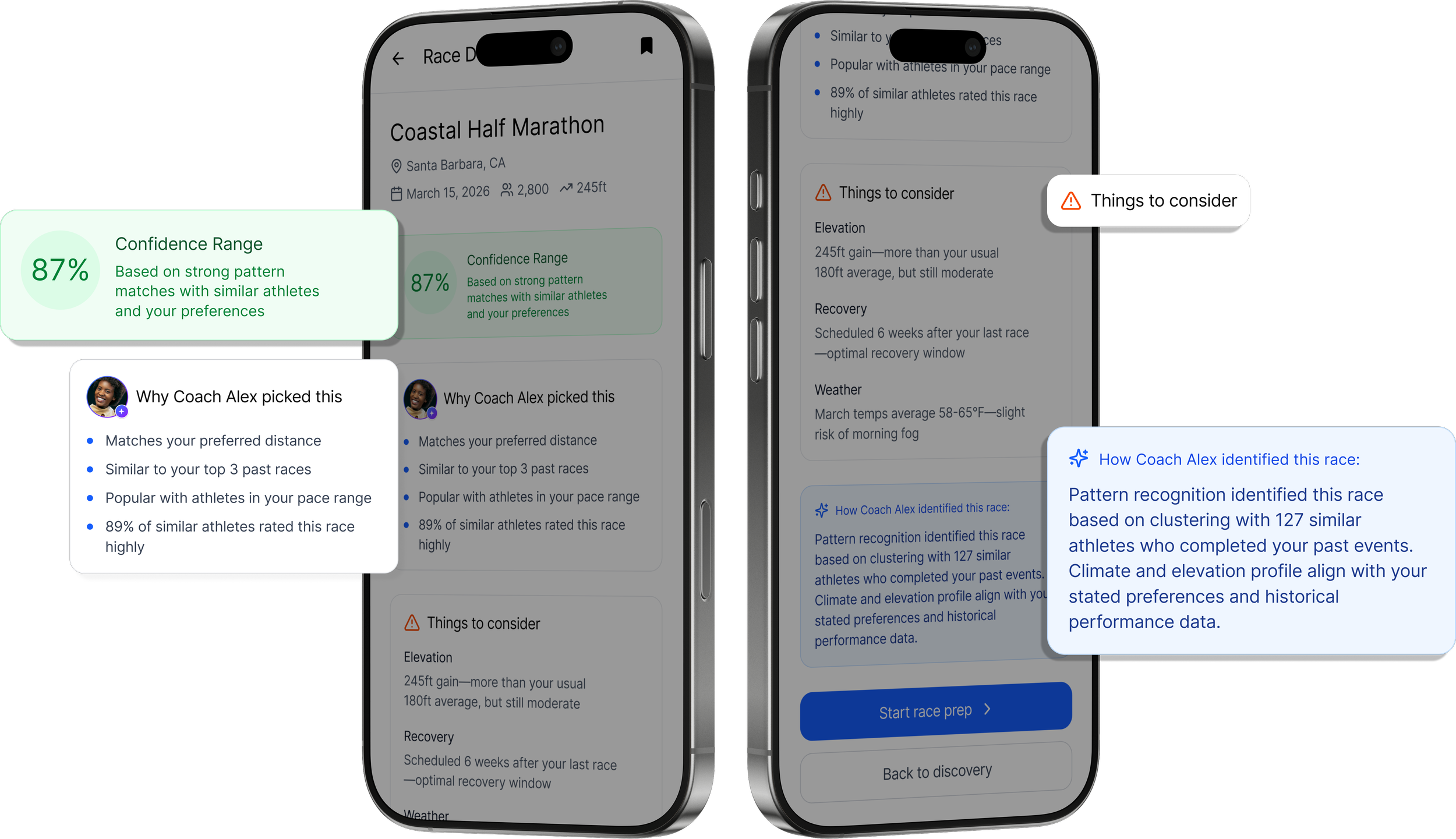
Transparent Decision Support
Athletes can compare races and review trade-offs
before committing.
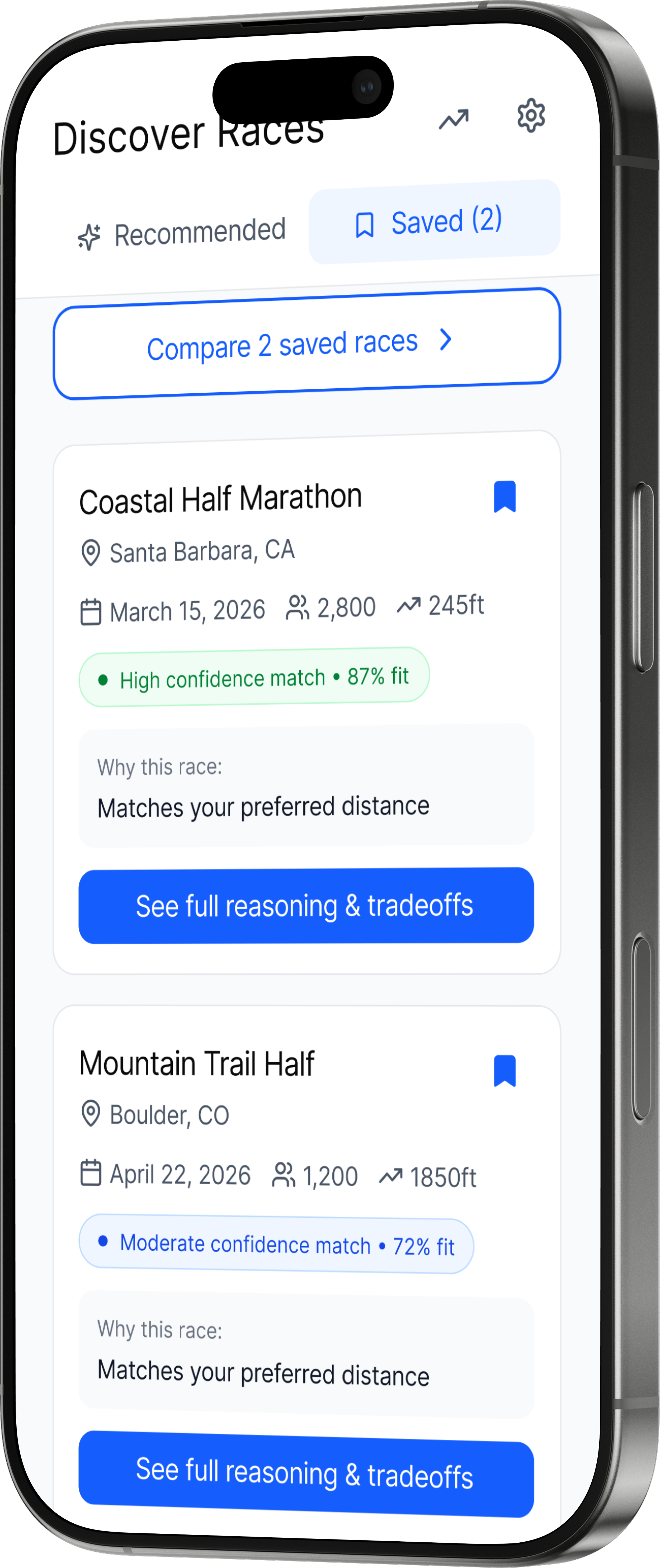
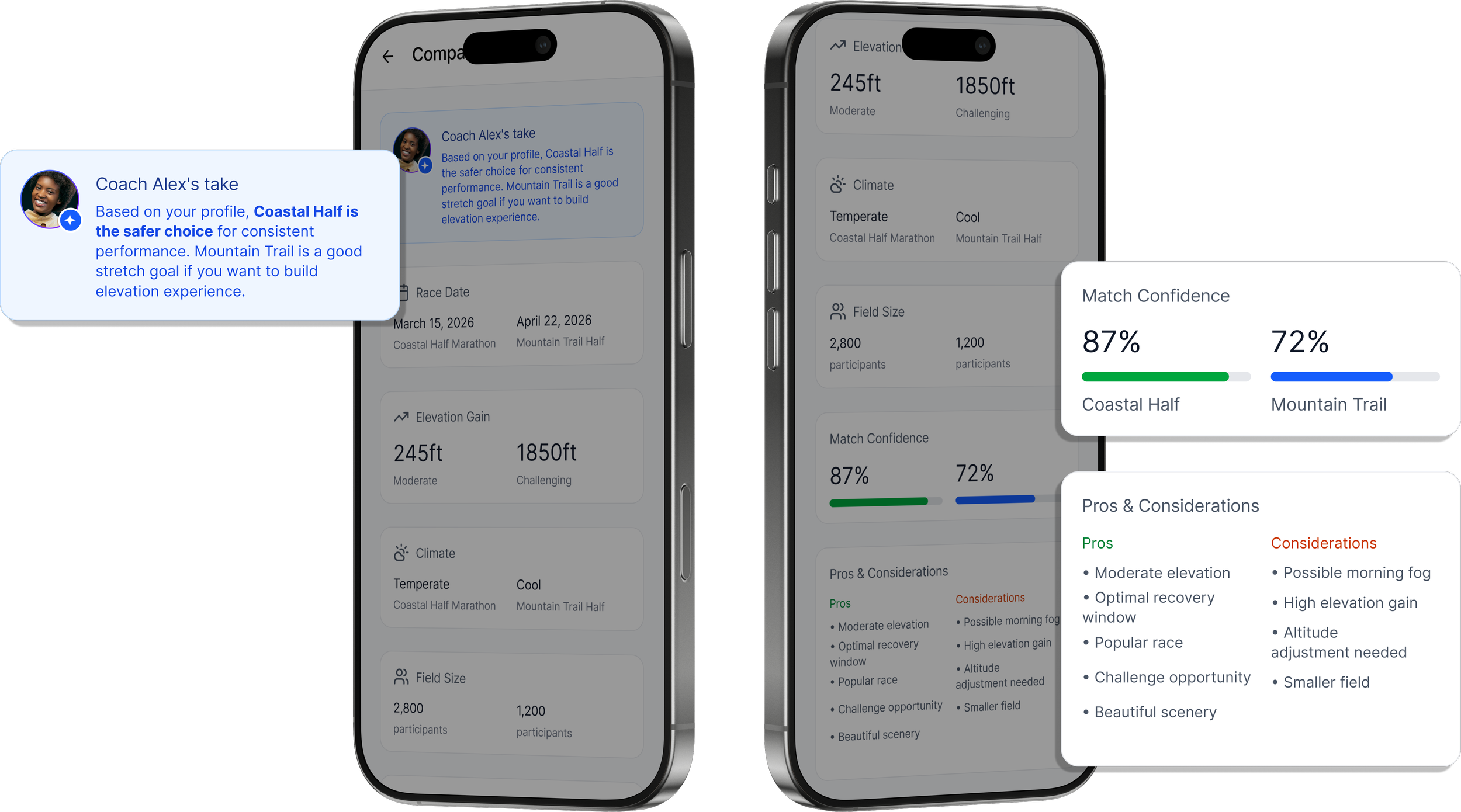
The goal is informed decisions, not blind suggestions.
Preparation Intelligence
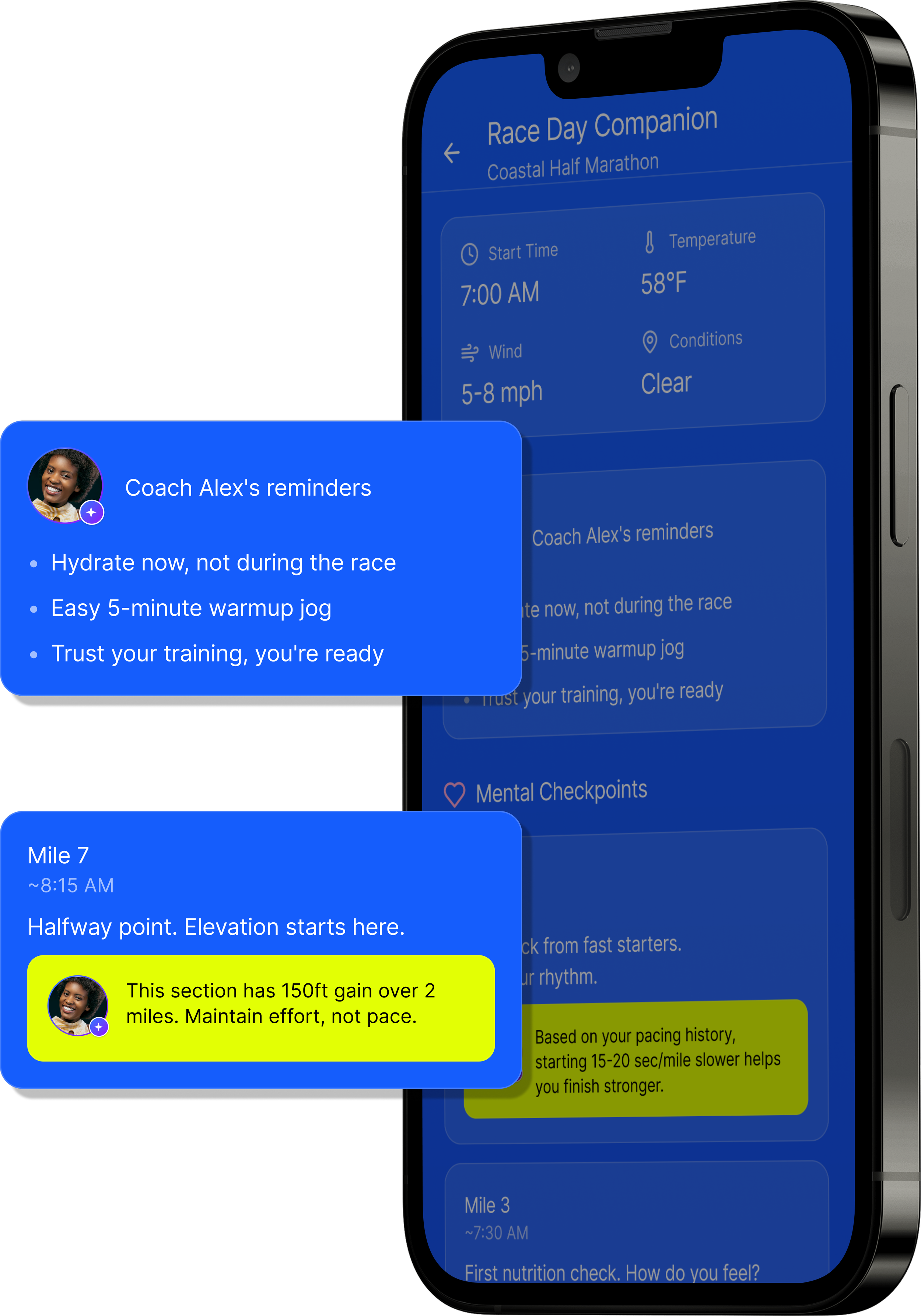
Guidance combines athlete history, peer race insights, and environmental conditions.
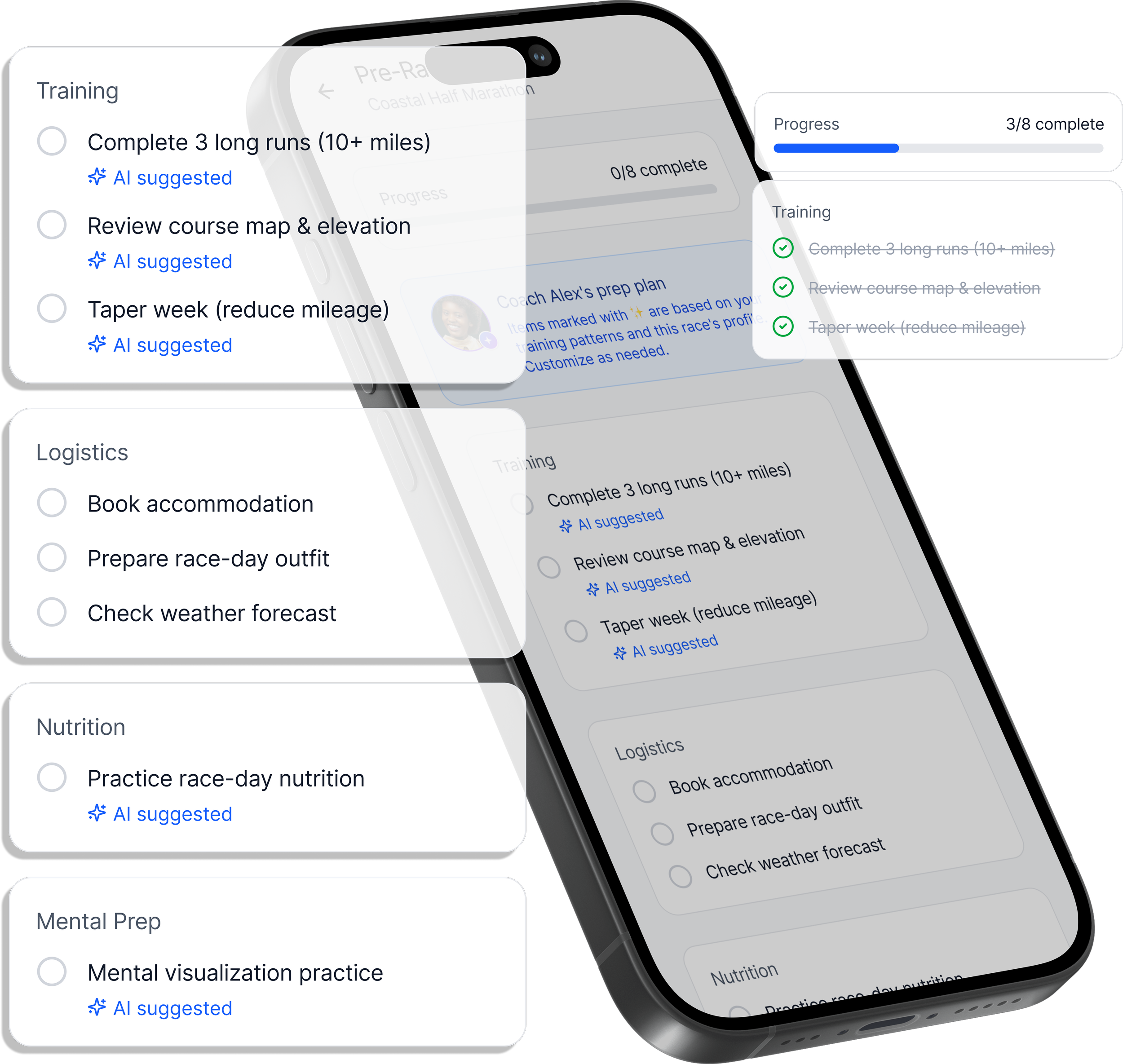
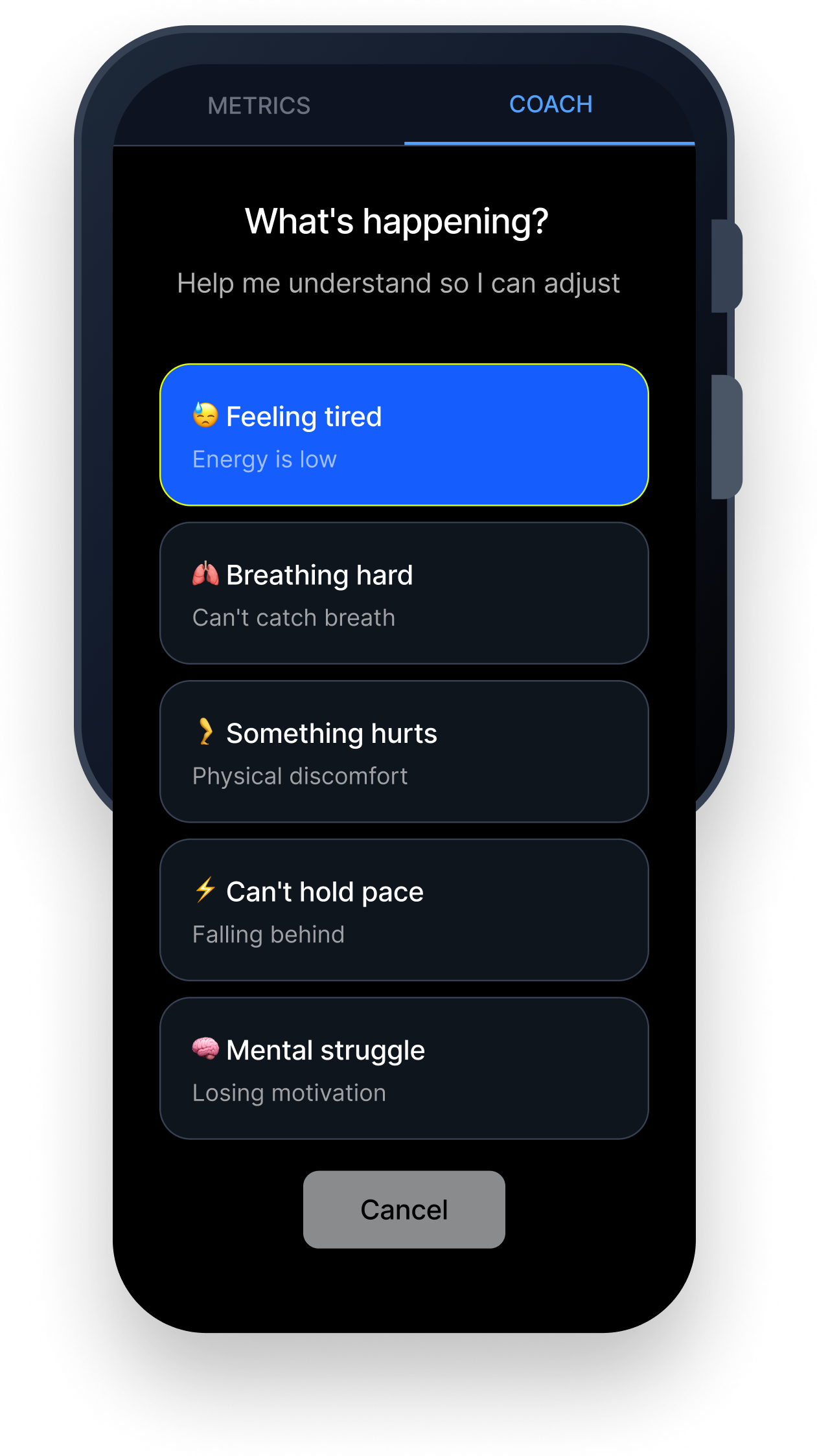
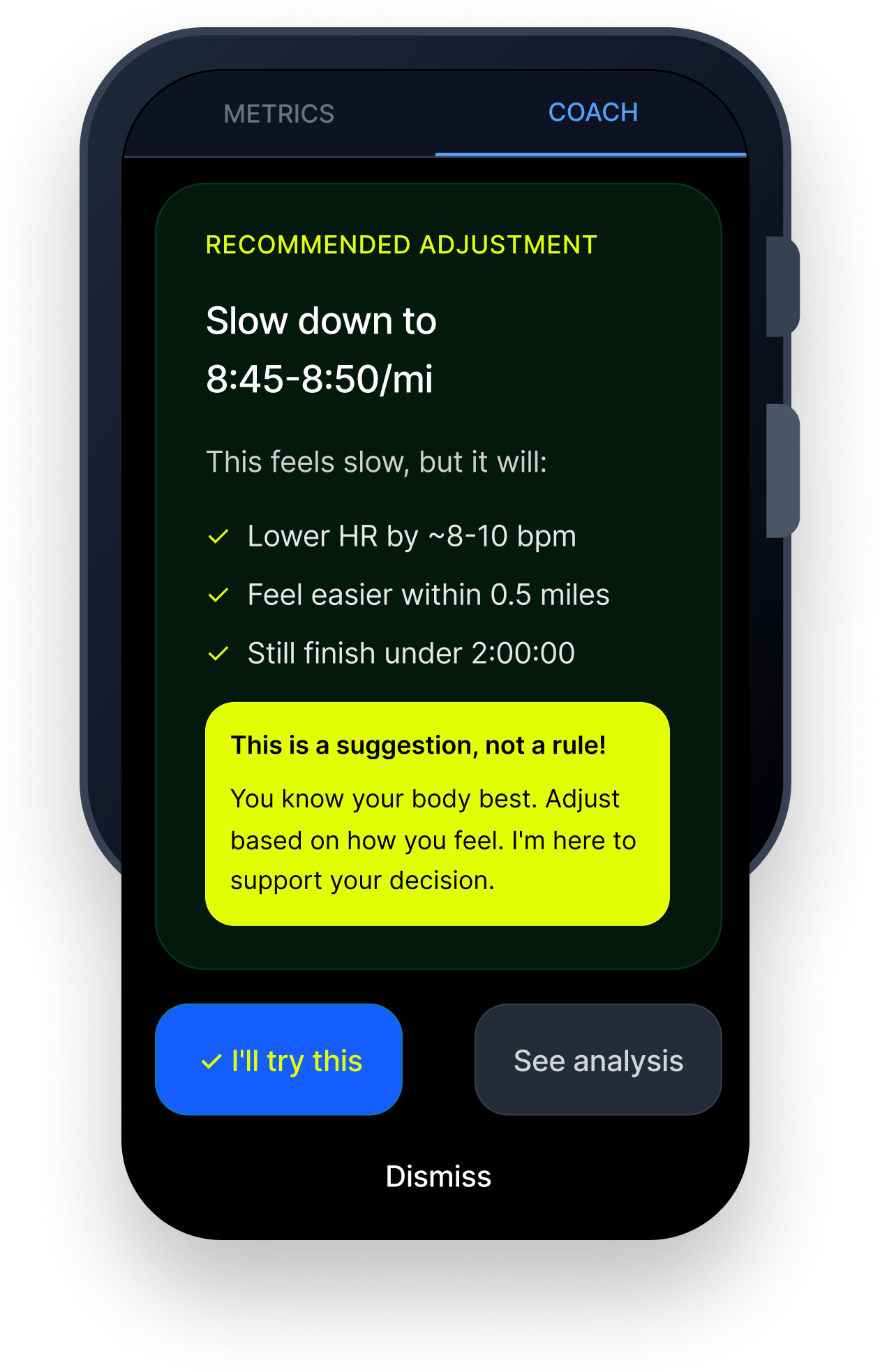
Race Day Companion
Watch Interface for Race Day Companion
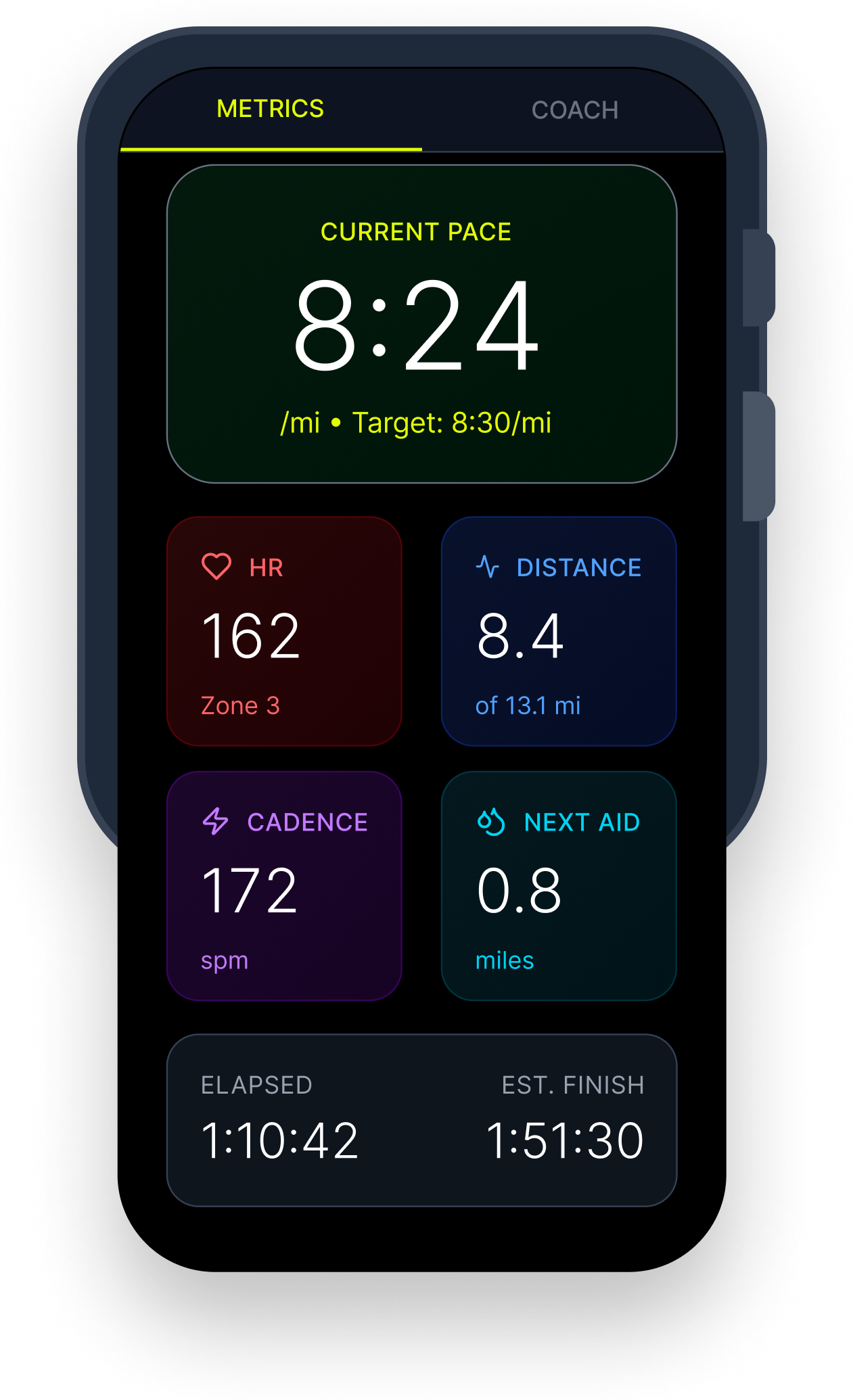
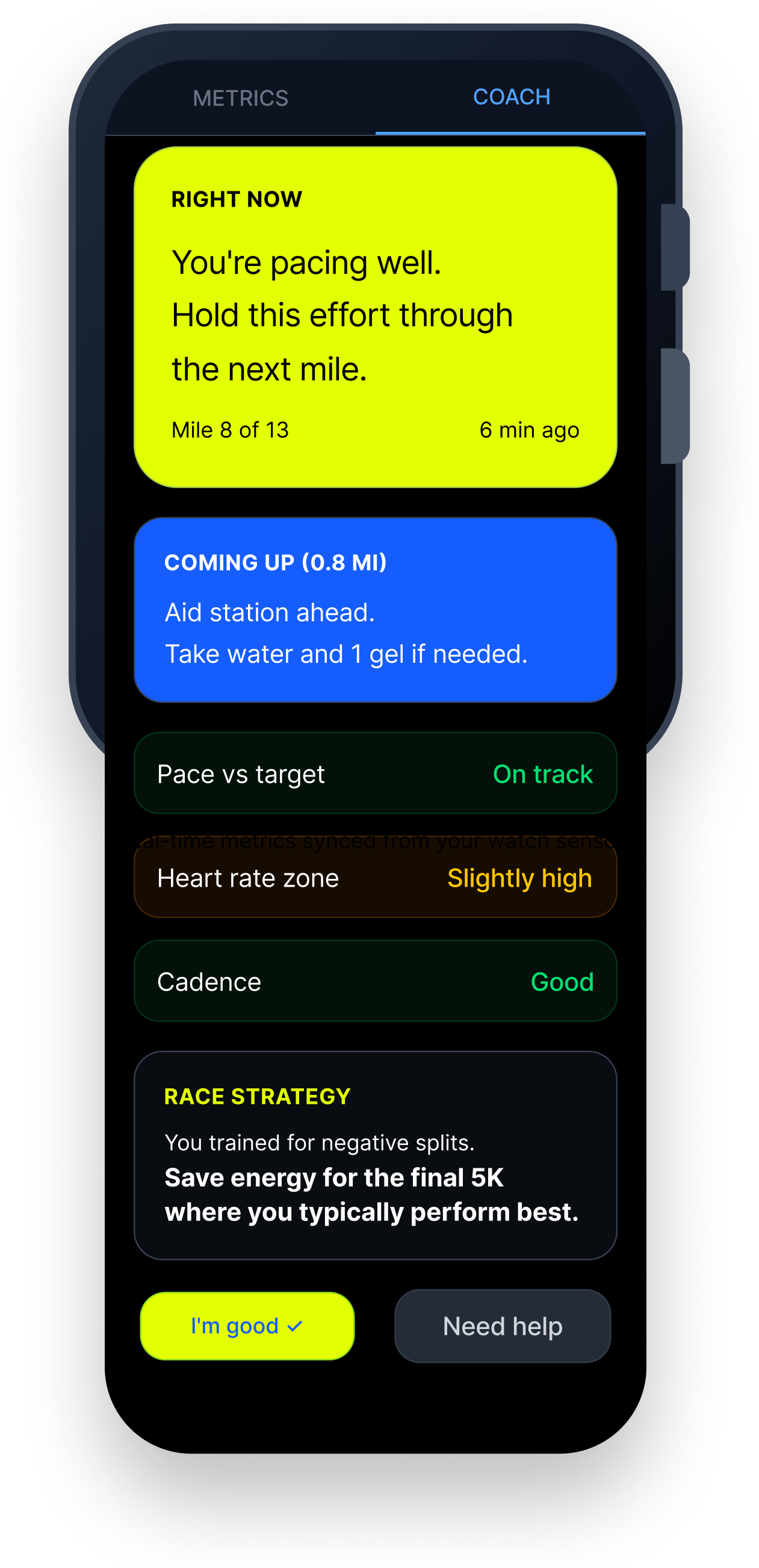
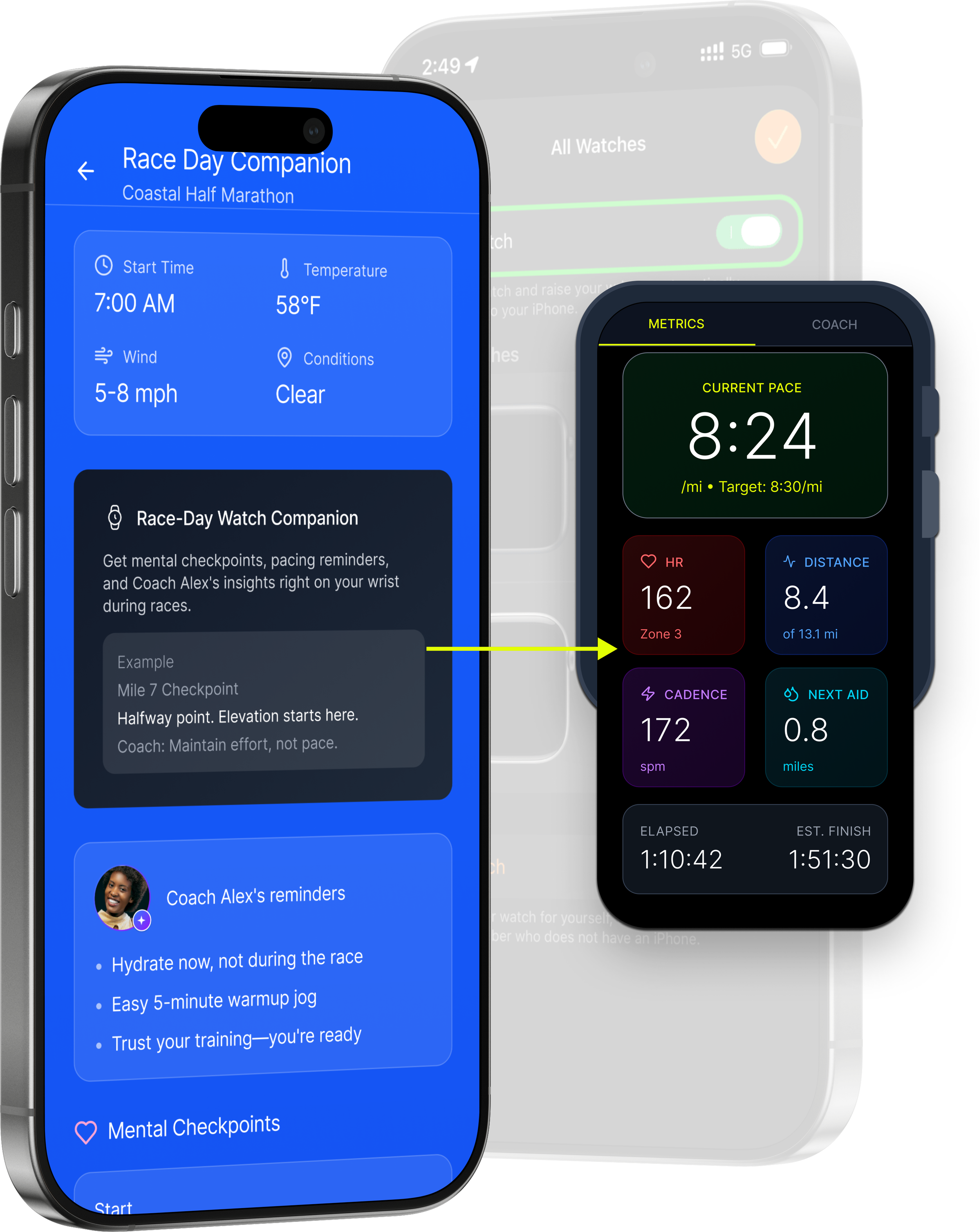
(Mobile + Watch)
What broke in testing
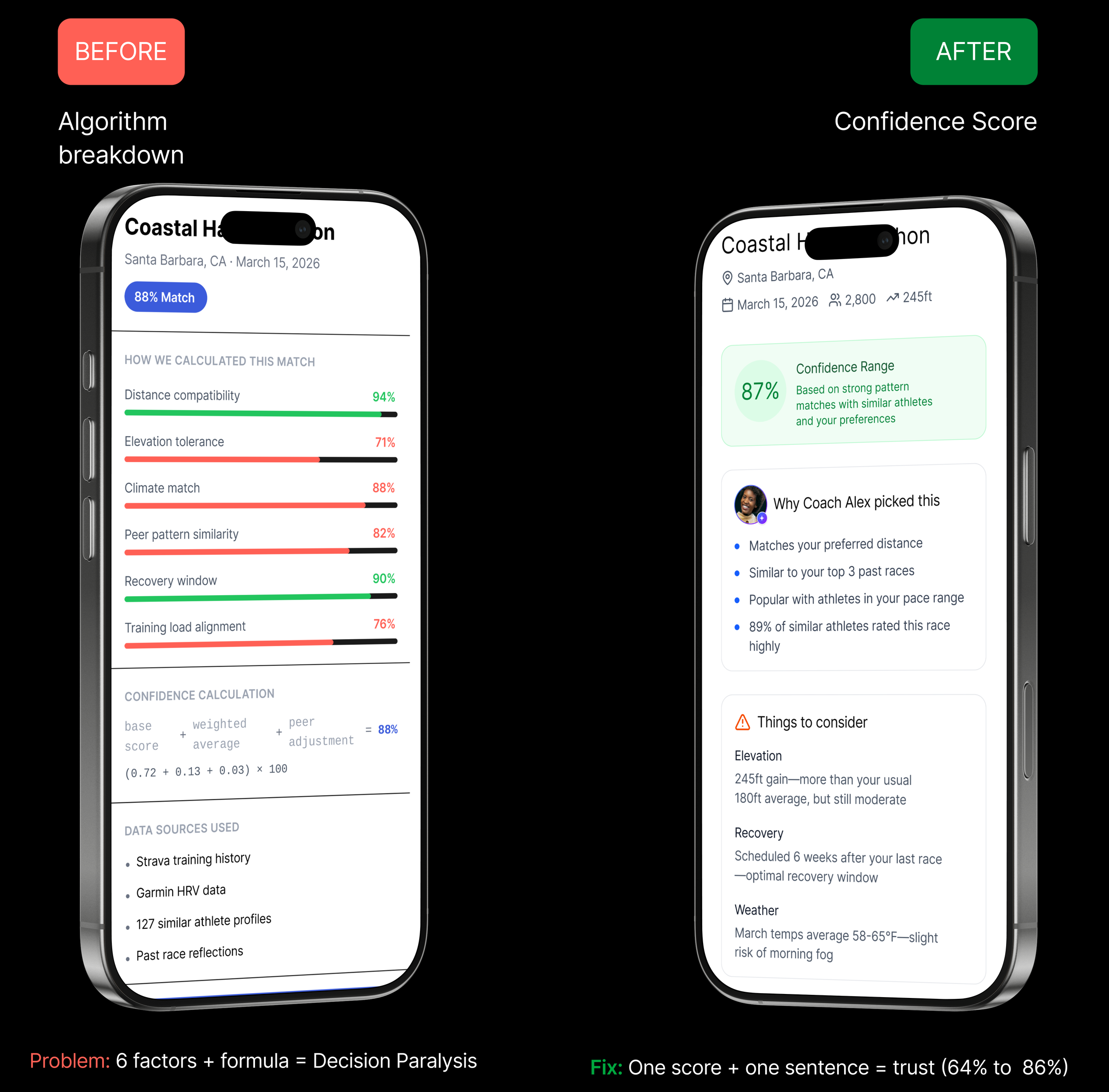
Two persistent failure patterns reshaped the core interaction model.
Too much reasoning → paralysis
Version one showed full algorithmic reasoning.
Athletes read every factor, then froze.

"I trust it more when it's simple. When there’s too much information, I feel like I have to double-check everything."
— Intermediate runner, usability test
64% → 86% trust in recommendations after switching to progressive disclosure.
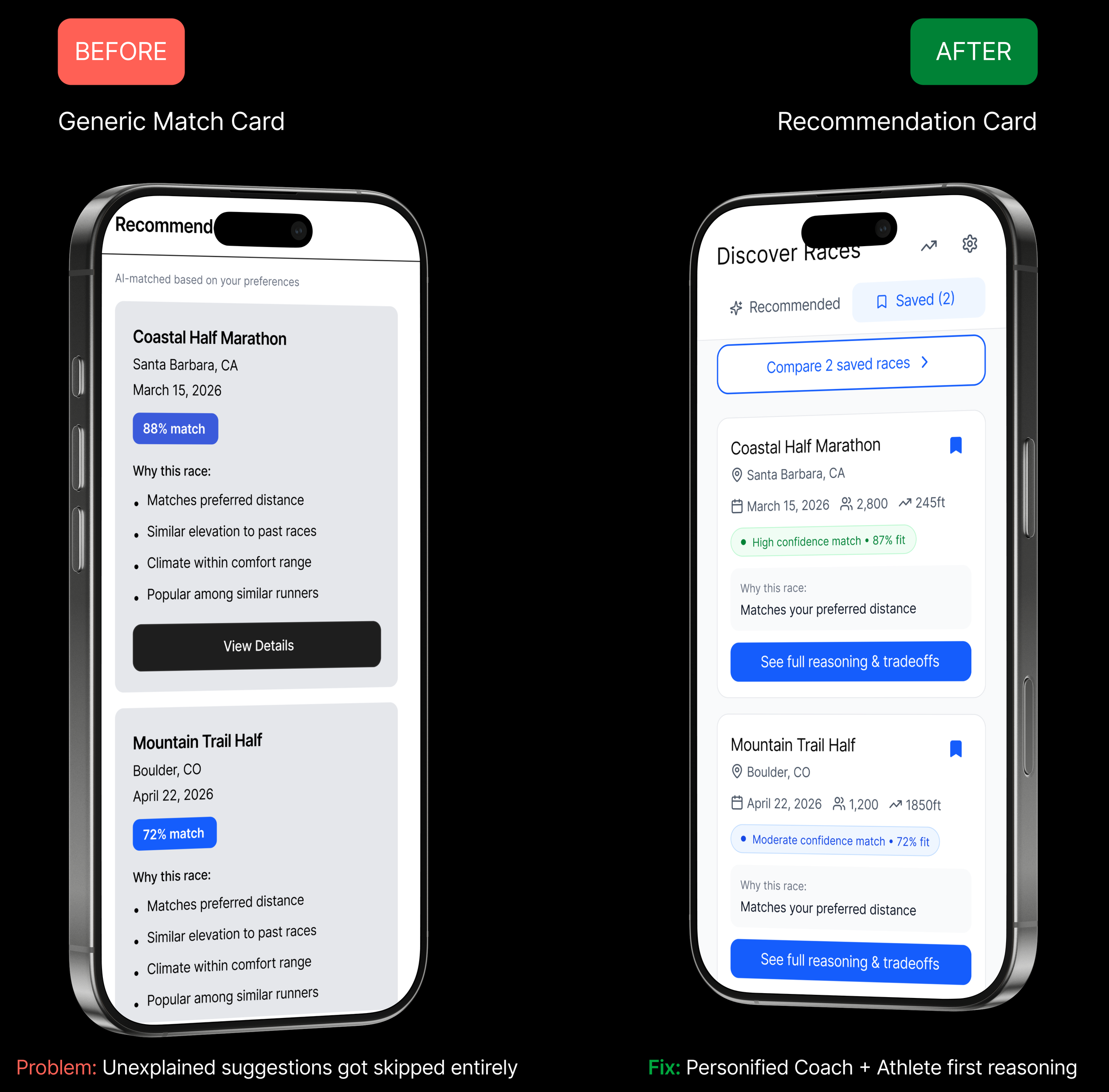
Unexplained suggestions got ignored
When guidance was vague, athletes ignored it. Big decisions like fees, travel, months of training, etc., need a named, traceable voice, not a black box.
"If I don't recognize the race or understand why it's there, I just skip it."
— Experienced marathoner, usability test
The fix: 'Why this race' rewritten to lead with the athlete's own data, not system logic.
Post-Race Learning
Turning race experiences into future race intelligence.
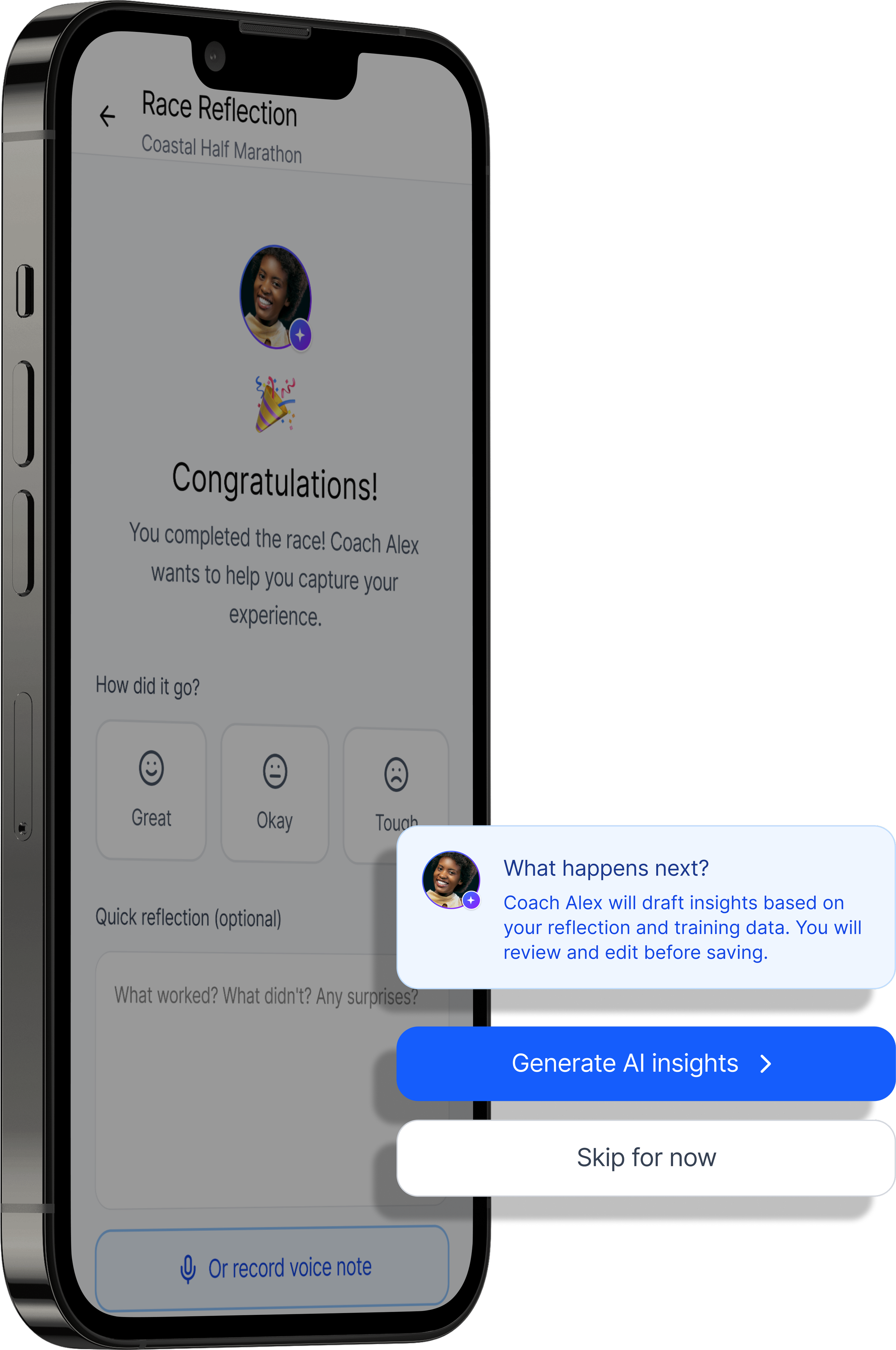
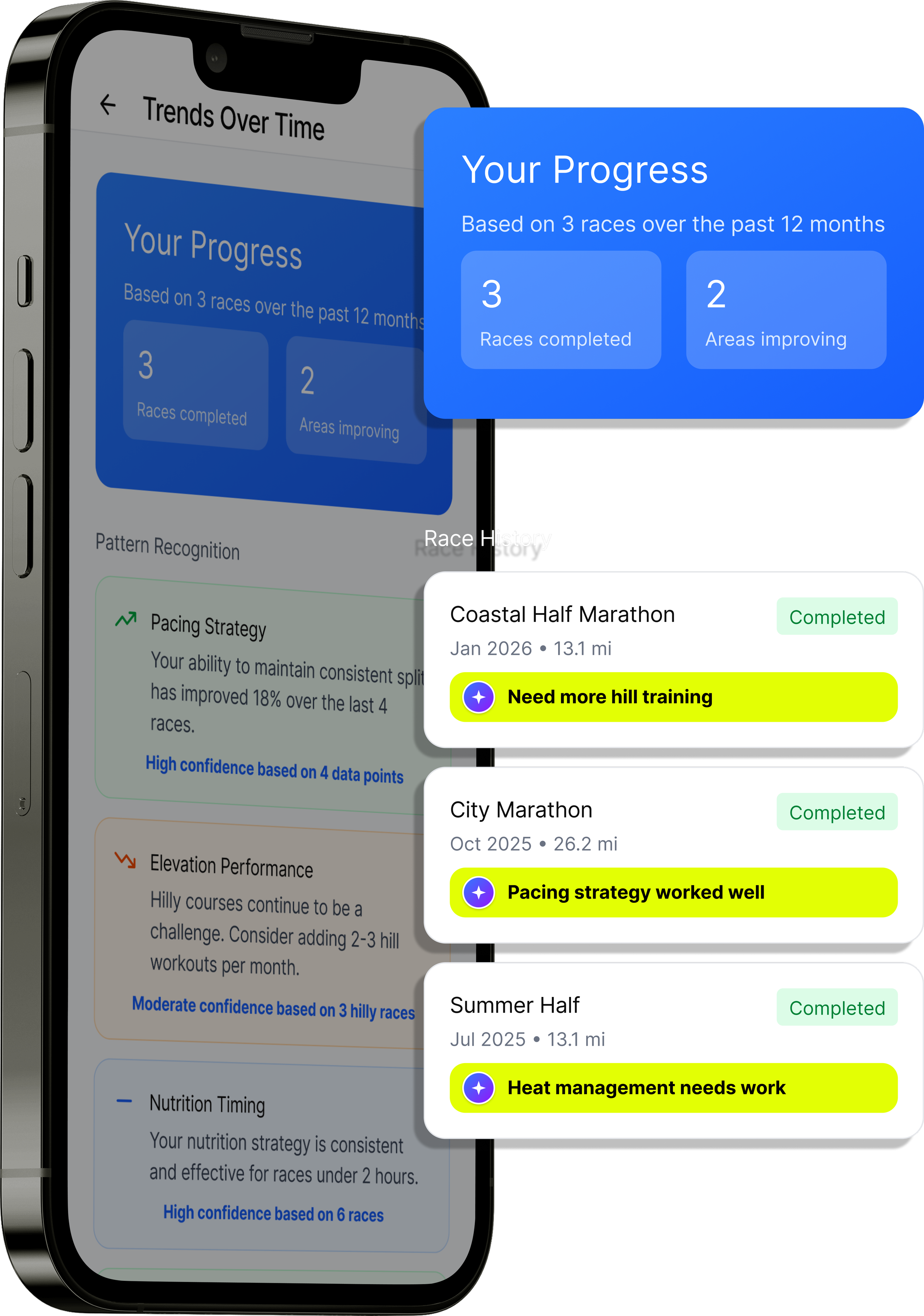
Athletes log quick post-race reflections so AXIS can merge subjective feedback with training data to generate insights and refine race guidance.
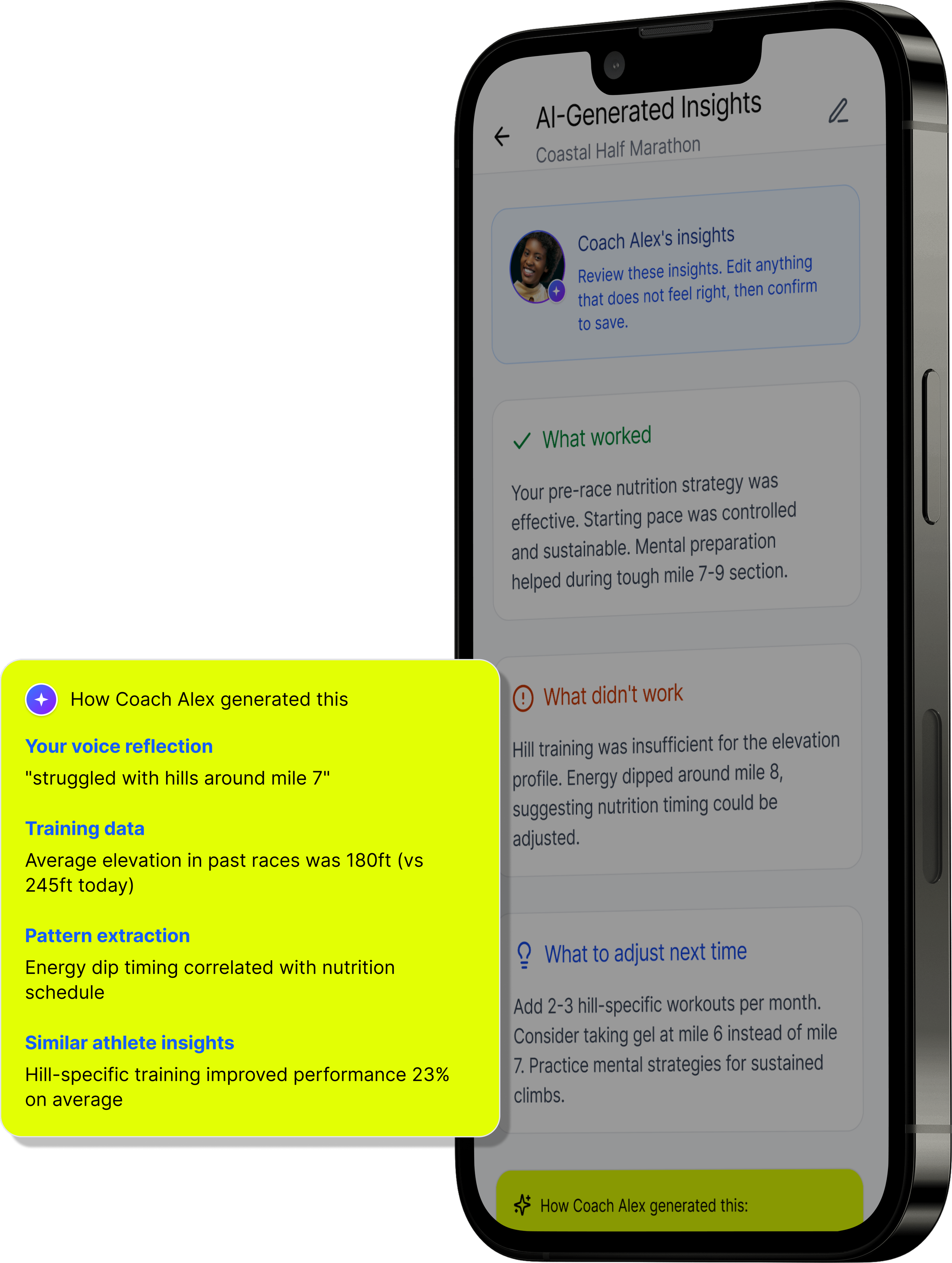
Once confirmed, insights are stored in the athlete’s training history and influence future recommendations.
Design Decisions Validated So Far
Early usability testing · 14 endurance athletes · half marathon to ultramarathon · prototype walkthrough + task-based sessions
90%
recommendation engine accuracy rate across athlete preference profiles
86%
trusted recommendations when explanation and confidence were shown.
86%
64% → 86% trust lift after switching to progressive disclosure

72%
preferred AI guidance combined with their own judgment rather than automated decisions.
Tasks: select a race · evaluate AI reasoning · compare two races · interpret confidence score
Personal Takeaway
I went into this assuming accuracy was the goal. Get the recommendation right and trust would follow. What I didn't see coming: athletes will skip a perfect recommendation if they don't recognize it as theirs. Control mattered more than correctness. AXIS didn't become useful when the AI got smarter, it became useful when athletes felt like they still had the final say.